
In this article:
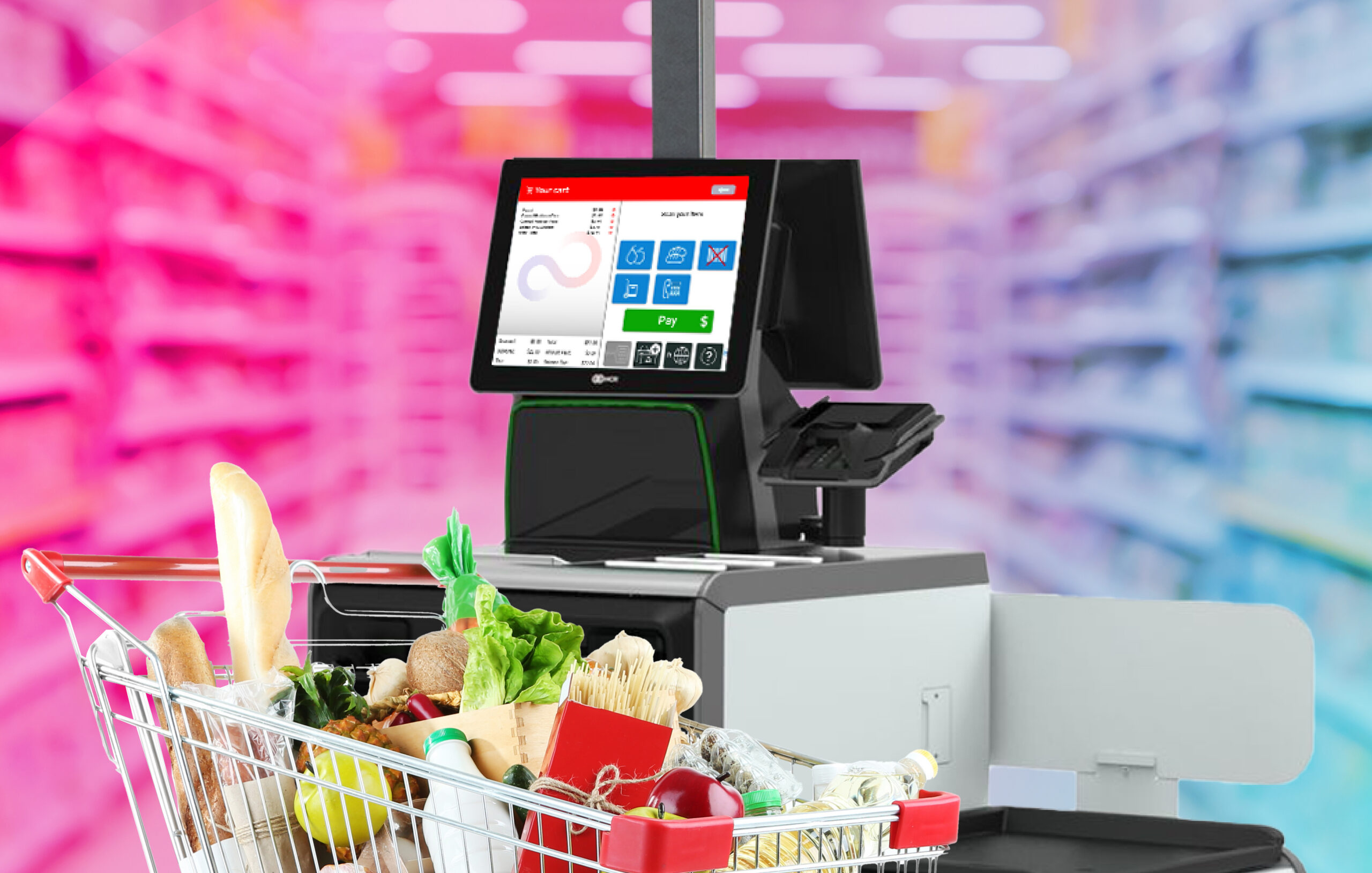
Be prepared to rise to today’s challenges and provide the seamless self-service customers are demanding with Fujitsu retail software.
A customer walks into a grocery store, grabs a cart full of items, and heads toward self-checkout. They quickly scan item after item, bag their groceries, and head out. But hidden beneath the other products is an item that was never scanned. Was it intentional? Was it an honest mistake? Without the right technology in place, the retailer may never know.
Now multiply that single moment by thousands of transactions every day across hundreds or thousands of stores. Small checkout errors can quickly become significant operational challenges, impacting revenue, shrink, and customer experiences.
This is the challenge retailers face today. Self-checkout has become an essential part of the modern shopping experience, but as self-service adoption has grown, retailers have encountered new challenges involving shrink, fraud prevention, labor efficiency, and customer satisfaction.
The question is no longer whether self-checkout belongs in retail. The question is how can retailers make self-checkout smarter, more secure, and easier for customers to use?
AI self-checkout technology is changing how retailers approach self-checkout by combining computer vision, machine learning, and intelligent analytics to identify issues in real time. Instead of relying only on barcode scans and employee oversight, AI-powered systems understand what is happening at the checkout station and help retailers make better decisions.
For retailers considering their next generation of in-store technology, understanding the benefits of AI for self-checkout is critical. Does AI actually reduce shrink? Does it improve the customer experience? Does it replace employees? And most importantly, does the investment deliver a measurable return?
How AI is Transforming Self-Checkout
Self-checkout was originally designed to allow customers to complete purchases quickly and independently.
That idea remains valuable. According to the U.S. Chamber of Commerce, self-checkout continues to be one of the most widely adopted retail technologies as consumers increasingly expect convenience and flexibility in how they shop. However, traditional self-checkout systems have limitations.
A barcode scanner knows when an item is scanned. It does not necessarily know:
For years, retailers have addressed these challenges through additional staffing, security cameras, and manual monitoring. However, these approaches are difficult to scale.
A single associate may be responsible for monitoring several self-checkout lanes simultaneously. During busy periods, identifying every possible issue becomes nearly impossible.
Artificial intelligence changes the equation. AI allows self-checkout systems to move from simply processing transactions to understanding them.
Using computer vision for retail, AI-powered systems can analyze visual information from cameras, compare it with transaction data, and identify unusual activity as it happens. Instead of asking employees to watch everything, AI helps identify where attention is needed most.
What is AI Self-Checkout?
AI self-checkout uses artificial intelligence technology to make self-service checkout systems more intelligent, accurate, and secure.
Traditional self-checkout relies on established technologies to process transactions, while AI self-checkout adds a new layer of intelligence to better understand, analyze, and improve the checkout experience.
Traditional self-checkout security relies on:
Barcode scanning
Weight verification
Customer input
Employee intervention
AI self-checkout adds another layer of intelligence by using technologies such as:
Computer vision
Machine learning
Object recognition
Image analysis
Real-time transaction monitoring
In simple terms, AI gives self-checkout the ability to “see” and understand what is happening. For example, when a customer places an item in the checkout area, AI can recognize the product visually, compare it with the scanned barcode, and determine whether the transaction is accurate.
This creates a checkout experience that is more proactive rather than reactive. Instead of discovering problems after a transaction is complete, retailers can identify and address potential issues immediately.
The Benefits of AI for Self-Checkout
AI is changing the way retailers approach self-checkout by helping solve some of the biggest challenges associated with traditional self-service technology. By adding intelligence to the checkout process, AI-powered solutions help retailers improve security, increase efficiency, support employees, and create better experiences for shoppers.
AI Helps Reduce Self-Checkout Shrink
One of the biggest reasons retailers are investing in AI self-checkout technology is loss prevention.
According to the National Retail Federation’s (NRF) 2023 National Retail Security Survey, retailers reported an average shrink rate of 1.6% of annual sales, representing more than $112 billion in losses across the retail industry.
Self-checkout can introduce additional risks because customers are responsible for scanning their own products. Loss can occur through:

Accidental missed scans

Intentionally not scanning items
Barcode swapping

Incorrect product selection

Items left inside carts or baskets
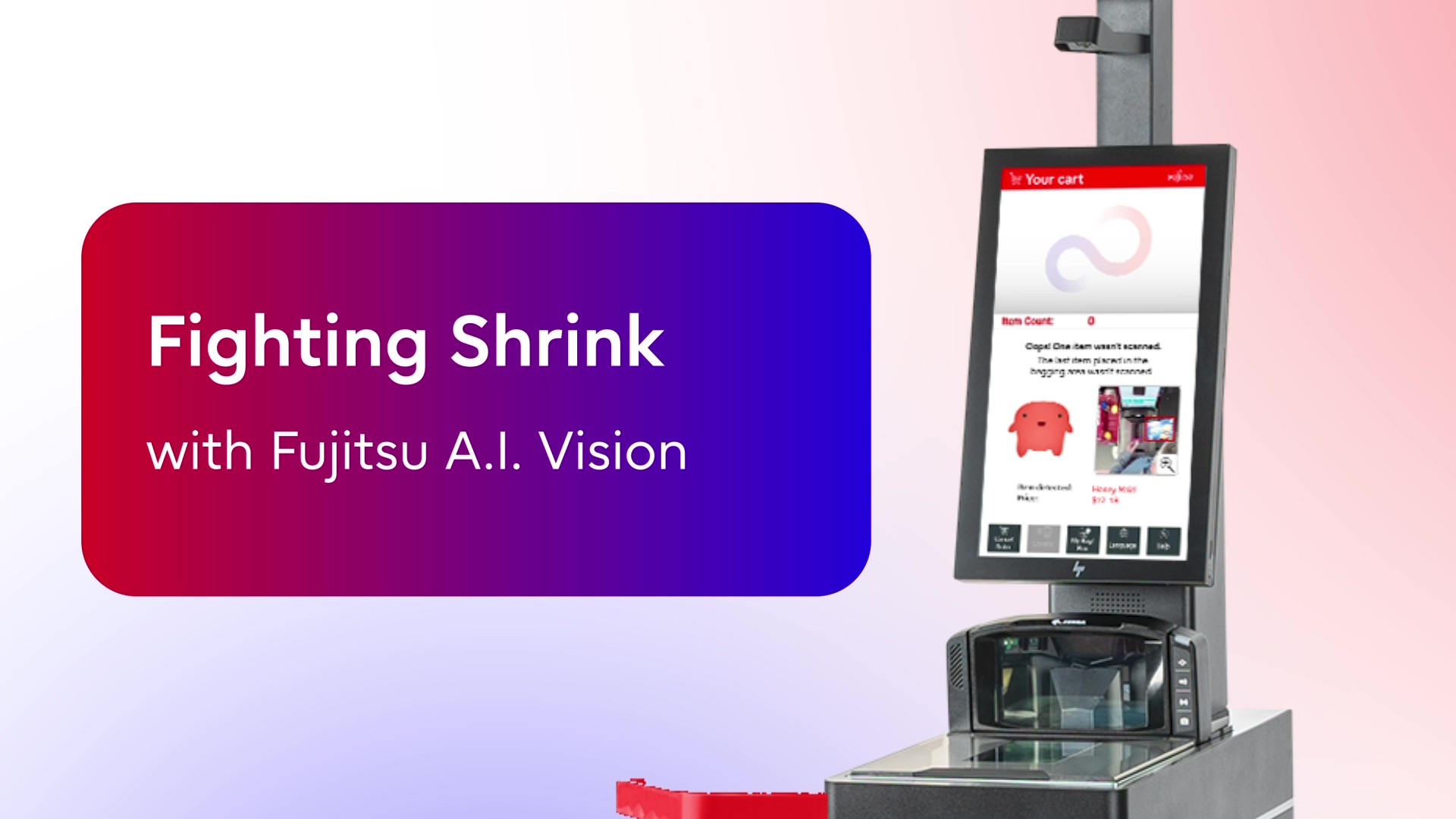
AI helps address these challenges by providing real-time visibility through Scan Avoidance Detection and Barcode Swapping Identification.
Scan avoidance occurs when an item moves through checkout without being properly scanned. This can happen intentionally or accidentally. Shoppers may overlook an item, especially when managing large carts, children, bags, or multiple products at once.
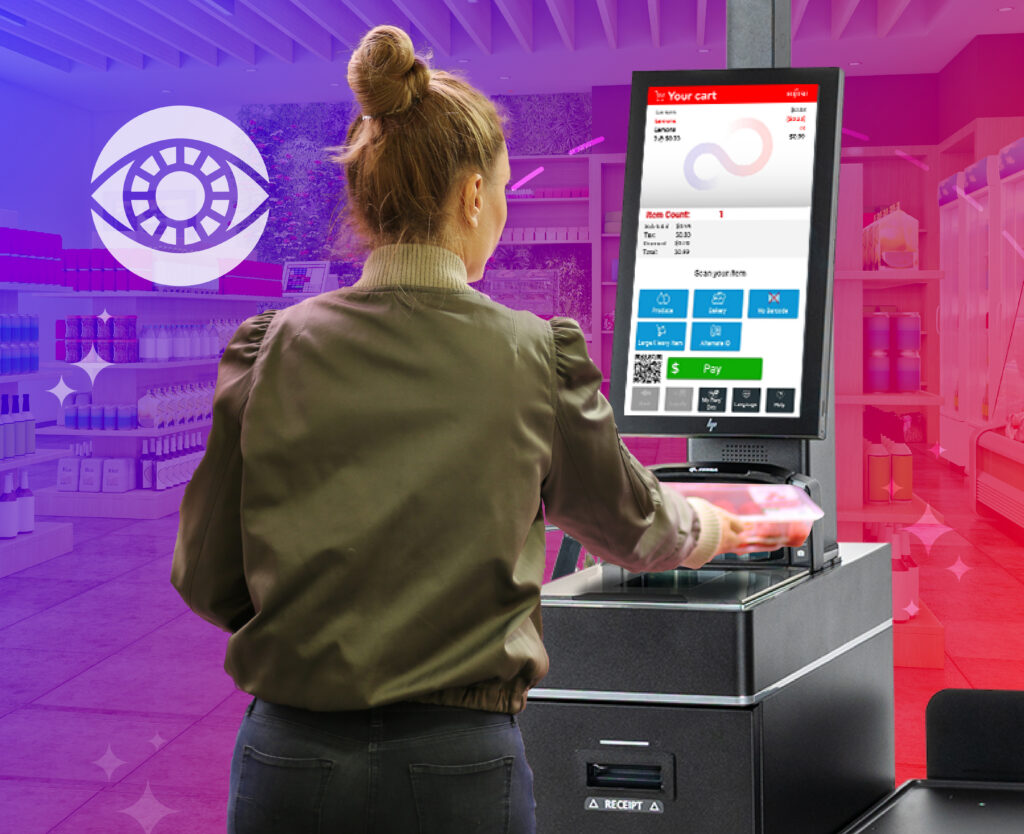
AI-powered self-checkout systems use computer vision to identify when an item appears to have bypassed the scanning process. The system can then alert the customer or notify an associate, creating an opportunity to correct the issue before the transaction is completed.
This approach helps retailers reduce losses while avoiding unnecessary friction for honest shoppers.
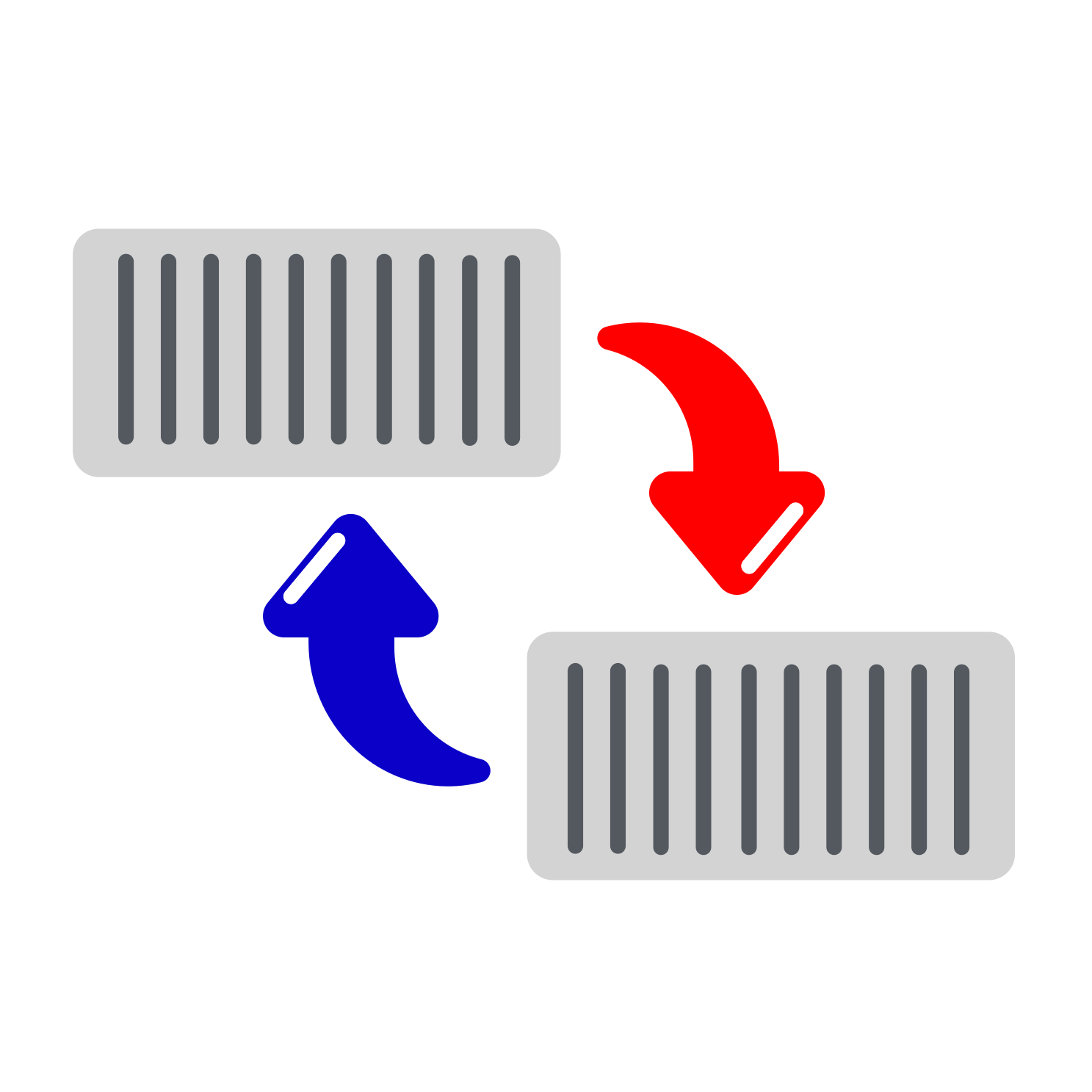
Barcode swapping is when a customer attempts to scan a lower-priced barcode while purchasing a more expensive item. Traditional barcode scanners only confirm that a barcode was scanned, not whether the barcode matches the physical product. AI changes that.
Using computer vision for retail, AI-powered systems can compare the item being scanned with the product associated with the barcode. If the system detects a mismatch, it can flag the transaction for review.
This provides retailers with an additional layer of protection without requiring employees to manually inspect every purchase.
AI Creates a Faster, More Convenient Checkout Experience
Retailers often worry that adding security measures will create more friction for customers. Historically, that concern has been valid. Additional verification steps and intervention requirements can slow down checkout and create frustration.
The goal of modern AI self-checkout is different. With AI, the objective is to avoid creating more barriers, and to remove unnecessary friction while improving accuracy.
AI-powered systems can make checkout faster through capabilities such as:

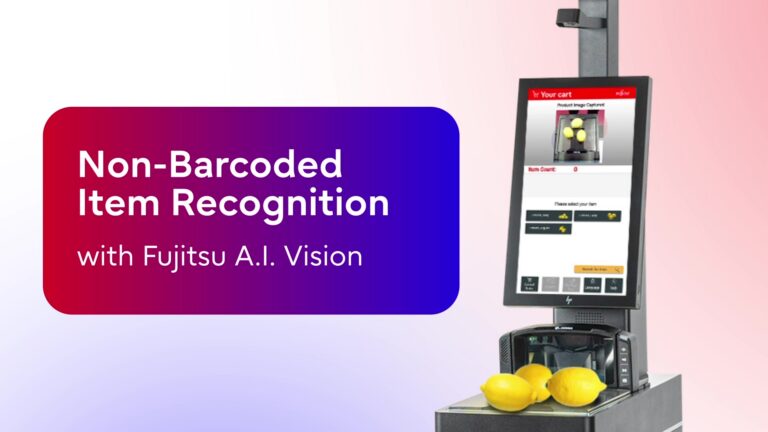
Item Recognition
Item recognition allows AI systems to identify products visually rather than relying only on traditional barcode scanning. This can be especially valuable for:
Produce items
Bakery products
Item with difficult-to-read labels
Products frequently affected by scanning errors
Instead of requiring customers to search through menus or manually enter product information, AI recognizes items automatically. This creates a smoother experience for shoppers while reducing common checkout frustrations.
A 2023 survey by the Food Industry Association (FMI) found that shoppers continue to value convenience and efficiency, making smooth, hassle-free checkout experiences more important than ever.
AI Improves Employee Efficiency without Replacing Them
One of the most common questions retailers ask is: “Will AI replace my employees?”
The answer is no. AI self-checkout technology is designed to support employees, not eliminate them.
Retail associates provide something technology cannot: human interaction, problem-solving, and customer service. The challenge is that employees cannot watch every transaction at every moment.
AI acts as an additional set of eyes. Instead of constantly monitoring multiple checkout lanes, associates can focus on situations where their assistance is truly needed. This allows staff to spend more time on higher-value activities, including:

Helping customers
Restocking products

Maintaining store appearance
Supporting online fulfillment

Improving shopping experiences
AI handles repetitive monitoring tasks while employees focus on creating positive customer interactions, resulting in a better balance between automation and human service.
AI Provides Better Visibility into Retail Operations
Another major benefit of AI for self-checkout is the ability to generate valuable insights.
Traditional checkout systems capture transaction information. AI-powered systems provide context, allowing retailers to better understand:
This information allows retailers to make smarter decisions about staffing, store layouts, and loss prevention strategies. Instead of reacting to shrink after it occurs, retailers can take a proactive approach.
AI transforms self-checkout from a simple transaction point into an intelligent retail solution.
AI Helps Retailers Improve ROI
For any major technology investment, retailers ultimately need to answer one question: Is it worth it?
While improving customer experience and reducing friction are important goals, retail leaders need measurable business outcomes. They need to understand how AI self-checkout technology impacts revenue, labor efficiency, shrink reduction, and operational performance.
Realizing ROI from AI self-checkout comes quickly because of:

Reduced shrink

Fewer transaction errors

Improved employee productivity

Faster customer throughput
Better use of existing technology investments
Unlike traditional loss prevention that relies heavily on manual observation, AI can monitor every transaction consistently across every lane, every day.
Reducing Shrink Creates Immediate Financial Impact
It’s clear that shrink remains one of retail’s biggest challenges. Even small improvements in shrink can create significant financial results.
For example, a retailer operating hundreds of stores with millions of annual transactions may recover substantial revenue by reducing:
Missed scans
Intentional theft
Barcode manipulation
Unscanned cart items
AI does not need to prevent every loss event to create value. Reducing even a fraction of self-checkout shrink can generate measurable financial benefits.

Improving Labor Efficiency
Labor optimization is another major component of ROI.
Retailers continue to face challenges finding and retaining employees. According to the U.S. Bureau of Labor Statistics, retail trade employment continues to experience workforce fluctuations as retailers adapt to changing consumer expectations and operational demands.
AI helps retailers make better use of their existing teams. Instead of assigning employees primarily to monitor self-checkout lanes, retailers can use AI-powered alerts to direct attention where it matters most.
This creates a more efficient operating model.
For example, a retailer operating hundreds of stores with millions of annual transactions may recover substantial revenue by reducing:
Before AI:
Associates constantly monitor multiple lanes
Potential issues may go unnoticed
Employees spend time reacting
With AI:
Technology monitors transactions continuously
Associates receive targeted alerts
Employees focus on helping customers
The result is a more productive workforce and a better customer experience.
AI Improves Customer Experience without Adding Friction
One concern some retailers have about AI is whether customers will find it intrusive or frustrating. The reality is that customers do not want more technology for the sake of technology. They want easier shopping experiences.
They want checkout to be:

Fast
Accurate

Convenient
Reliable
The best AI self-checkout solutions accomplish this by reducing unnecessary interruptions.

Does AI Annoy Customers?
A common misconception is that AI-powered security creates a more stressful checkout experience. However, the purpose of AI is not to make customers feel monitored. The purpose is to make checkout smoother.
Consider the difference:
Traditional self-checkout:
A customer accidentally misses an item
The transaction stops
An employee must manually review the situation
The customer has to wait
AI-powered self-checkout:
The system recognizes a potential issue immediately.
The customer receives a simple notification
The transaction continues after correction
The difference is less friction. AI allows retailers to move away from broad security measures and toward targeted, intelligent assistance.

Creating More Inclusive Shopping Experiences
AI can also improve accessibility. For some customers, traditional checkout processes can create challenges, including:
Difficulty reading small labels
Challenges navigating product menus
Trouble scanning certain items
Needing additional assistance
The result is a more productive workforce and a better customer experience.
Computer Vision for Retail is Redefining What Self-Checkout Can Do
At the center of AI-powered self-checkout is one of the most important technologies transforming retail: computer vision.
Computer vision allows machines to interpret and understand visual information, similar to how humans use their eyes and brains to recognize objects and patterns.
In retail environments, computer vision can analyze:

Products

Customer movements
Cart contents

Transaction activity

Checkout behaviors
This technology enables capabilities that were previously impossible.

Moving Beyond Barcode Scanning
Traditional barcode scanning requires every item to follow a specific process:
Computer vision for retail introduces another layer of intelligence.
The system can recognize what an item looks like, understand where it is located, and compare that information against transaction data. This creates opportunities for:
Faster checkout
Fewer scanning errors
Better fraud prevention
Improved customer assistance

Basket and Cart-Based Loss Detection
One of the biggest challenges with self-checkout is identifying items that never enter the transaction. A customer may accidentally leave an item inside a cart or basket. A dishonest shopper may intentionally hide products. Either way, traditional systems struggle to identify the issue.
AI-powered computer vision can analyze the entire checkout environment, including:
Items placed in the scanning area
Items remaining inside carts
Items inside baskets
Transaction completion activity
If the system identifies a discrepancy, it can alert store associates before the shopper leaves.
This capability is becoming increasingly important as cart-based loss continues to impact retailers. Everseen’s 2024 Retail Threat Curve Report found that cart-based loss continues to be a growing challenge for retailers, with unscanned items contributing to a significant portion of self-checkout losses.
AI Helps Create the Future of Retail: Friction Positive Self-Service
For years, retailers focused on removing all friction from shopping. Today’s retail environment requires a more balanced approach.
The future is not frictionless retail. The future is Friction Positive retail.
Friction Positive means using technology to remove unnecessary obstacles while adding helpful moments that improve the experience.
AI-powered self-checkout is a perfect example. A customer should not experience friction because a system cannot recognize a product or because an item was accidentally missed. However, a helpful intervention that prevents a mistake or speeds up checkout creates value.
AI makes these moments possible.
Measuring the ROI of AI Self-Checkout
Retailers evaluating AI should consider several measurements:
-
Shrink Reduction
-
Employee Productivity
-
Customer Satisfaction
-
Operational Consistency
-
Long-Term Scalability
How much revenue is recovered through fewer missed scans, barcode issues, and cart-based losses?
How much time can associates redirect toward customer service and store operations?
Are checkout experiences faster and easier?
Can the retailer provide the same checkout experience across multiple locations?
Can the technology adapt as customer expectations and retail challenges evolve?
-
Shrink Reduction
-
Employee Productivity
-
Customer Satisfaction
-
Operational Consistency
-
Long-Term Scalability
How much revenue is recovered through fewer missed scans, barcode issues, and cart-based losses?
How much time can associates redirect toward customer service and store operations?
Are checkout experiences faster and easier?
Can the retailer provide the same checkout experience across multiple locations?
Can the technology adapt as customer expectations and retail challenges evolve?
The strongest ROI comes when AI becomes part of a broader retail strategy.
How Fujitsu is Advancing AI-Powered Self-Checkout
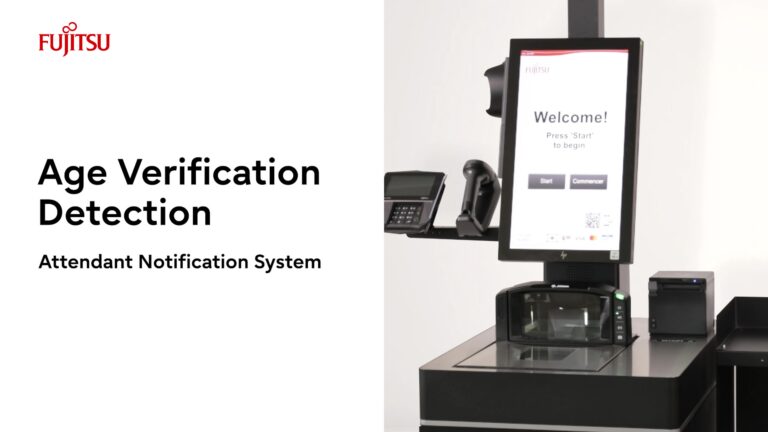
Fujitsu’s AI-powered self-checkout solutions are designed to address some of the industry’s biggest challenges without adding unnecessary friction. Using real-time image analysis and intelligent transaction monitoring, Fujitsu helps retailers improve accuracy, reduce shrink, and enhance the checkout experience through capabilities such as:
AI-Powered Item Recognition to automatically identify products and simplify checkout, especially for produce and other difficult-to-scan items.
Scan Avoidance Detection to identify items that have bypassed the scanning process, helping reduce accidental and intentional missed scans.
Barcode Swapping Detection to compare scanned barcode data with the physical product, helping identify mismatches before a transaction is completed.
Rather than replacing employees, Fujitsu’s AI acts as an intelligent assistant, continuously monitoring transactions, identifying potential exceptions, and notifying associates only when intervention is needed. This allows employees to spend less time watching checkout lanes and more time delivering the personalized service that shoppers expect.
The result is a self-checkout experience that balances convenience with security, helping retailers reduce losses, improve operational efficiency, and deliver the friction-positive shopping experience today’s consumers demand.
See How AI Can Transform Your Self-Checkout Experience
Self-checkout technology is evolving quickly. Retailers that embrace AI today can position themselves for a future where checkout is faster, safer, and more personalized.
Fujitsu Frontech North America helps retailers simplify self-service while improving security, efficiency, and customer satisfaction. Whether you are looking to reduce shrink, improve checkout performance, or explore the next generation of AI-powered retail technology, Fujitsu can help.
Unlock the Future of Retail with Fujitsu

Bob Brower
Bob Brower has developed a reputation of diversified technology sales leadership success in software, hardware and services.