
In this article:
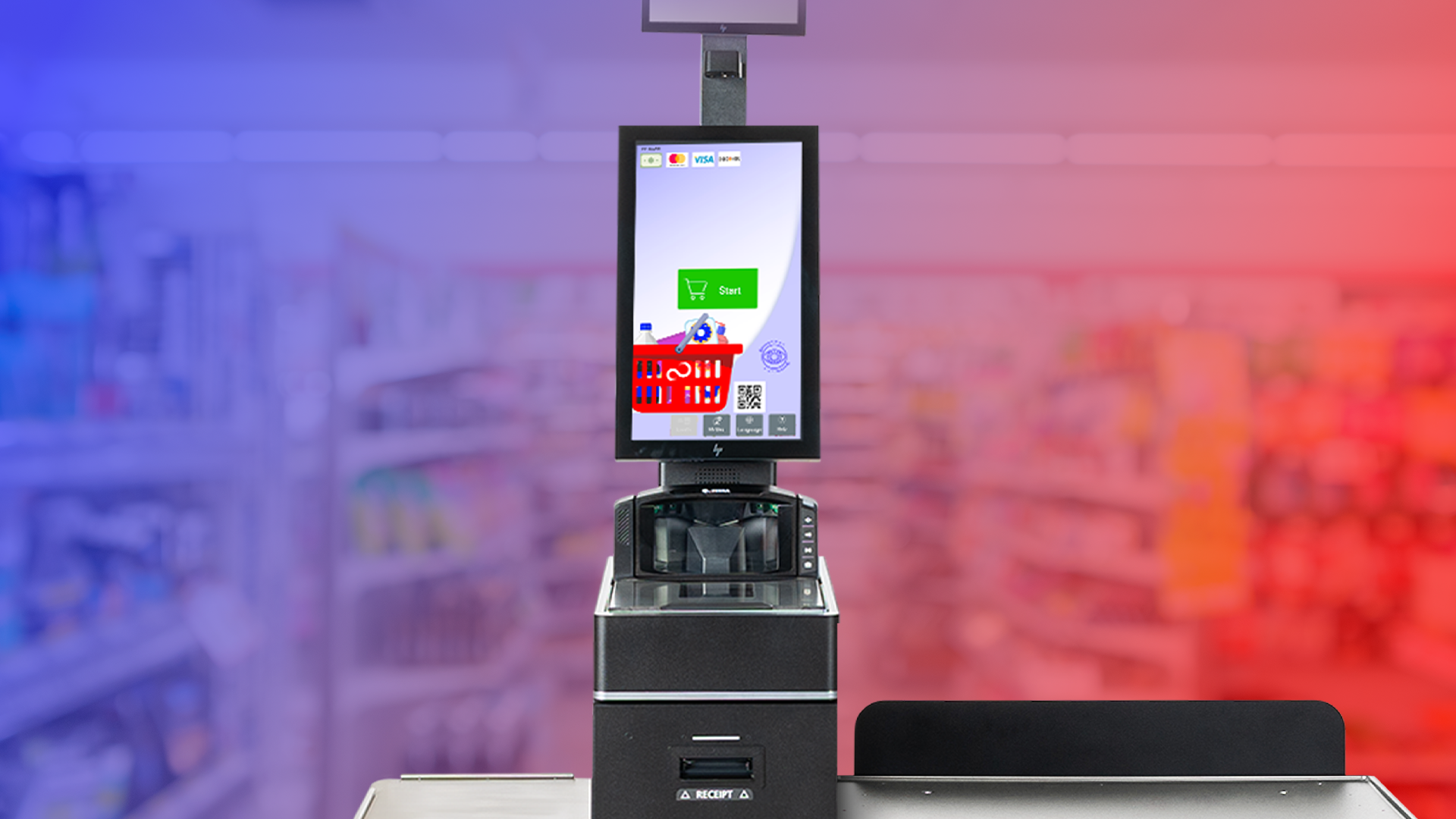
Streamline the self-checkout experience with top-of-the-line hardware and software solutions.
Grocery retailers are feeling pressure from every direction. The grocery labor shortage continues to make hiring and keeping employees difficult, while wages and operating costs keep rising. Many stores are short-staffed, and high turnover makes it hard to maintain consistency. At the same time, shoppers expect fast trips, short lines, and flexible checkout options. Shrink and retail theft add even more strain to daily operations.
To keep up, many grocers are turning to self-checkout as part of a retail tech for grocery strategy. Modern self-checkout systems are designed to speed up transactions, reduce reliance on traditional cashier staffing, and give customers more control over their experience. Solutions like Fujitsu’s Self-Service Simplified line of self-checkout hardware and software show how the right technology can help stores run more efficiently, move employees into higher-value roles, and create a stronger, more flexible front end.
The Grocery Labor Shortage Challenge
Finding and keeping store employees is more difficult than it was just a few years ago. The grocery labor shortage is part of a much larger workforce challenge. According to ManpowerGroup, 75% of employers worldwide report difficulty finding the skilled workers they need. This is not a short-term issue; it is an ongoing reality for many retailers.
In grocery, the pressure is even more intense. Reporting from Grocery Dive shows that employee turnover in grocery is around 69%, one of the highest rates across U.S. industries. That means stores are constantly recruiting, hiring, and training new team members. High turnover raises labor costs, reduces productivity, and can impact customer service when teams are short-staffed or inexperienced.
This combination of widespread hiring challenges and high grocery turnover is pushing retailers to rethink how they staff the front end. Instead of relying only on traditional manned lanes, many grocers are investing in retail technology solutions such as automation and self-service.
The goal is not to eliminate existing workers, but to use self-checkout benefits strategically, improving efficiency, giving shoppers the options they’re demanding, and allowing available staff to focus on higher-value tasks like stocking, customer support, and online order fulfillment.
Self-Checkout Benefits for Grocery
Self-checkout has become a key part of the solution to labor challenges for retailers. When used strategically, it helps stores improve speed, flexibility, and overall efficiency. Grocers using self-checkout technology benefit from:
Self-checkout is a practical response to today’s labor and operational pressures, helping grocers serve more customers while making smarter use of limited staff.
Addressing Common Self-Checkout Challenges
Self-checkout delivers real benefits for retailers, but some grocers continue to be skeptical of self-checkout. However, today’s modern self-checkout systems include features made to combat the common criticisms of retail self-service.
-
Shrink and Theft
-
Transactions Can Be Complex
-
Some Customers Don’t Prefer Self-Checkout
-
Upfront Investment and Integration
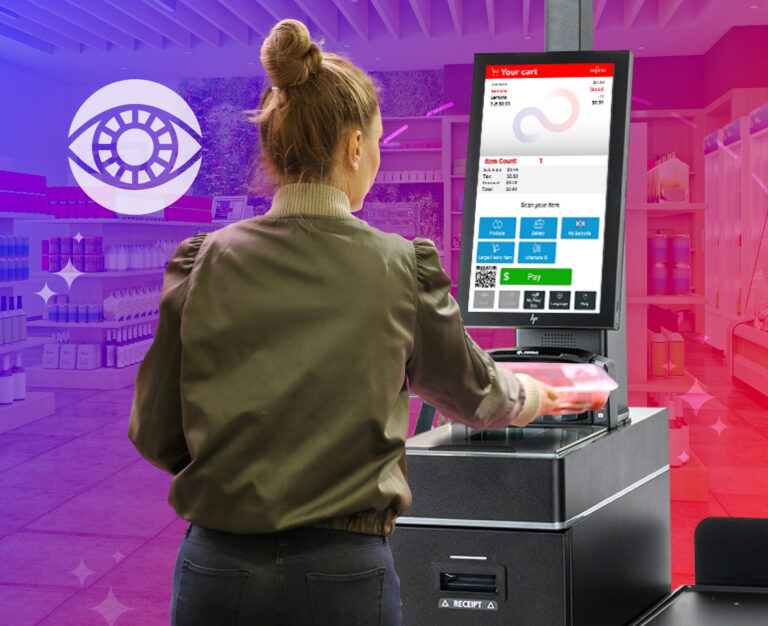
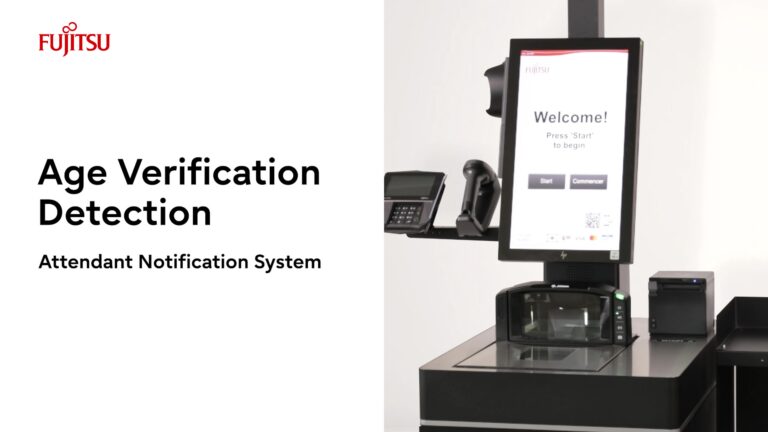
One of the most common concerns with self-checkout is increased shrink. Self-checkout can create risk if it operates without proper oversight. However, pairing self-checkout with A.I. monitoring, weight verification, and trained attendants reduces shrink. When security measures are built into the system, retailers can take advantage of self-checkout benefits while protecting their margins.
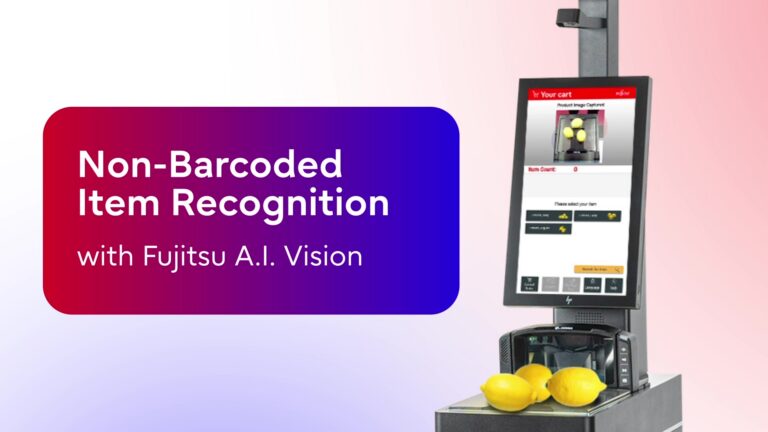
Large baskets, alcohol purchases, non-barcoded and weighted items like produce, and returns can slow down self-checkout. The solution is balance. Self-service works best when it is paired with intelligent software and well-trained attendants that help guide shoppers through moments of friction, creating meaningful in-store interactions.
Some shoppers enjoy interaction with a cashier. Others may feel less comfortable with technology. But that is not true for all shoppers. Self-checkout should add choice, not remove it. Offering both traditional lanes and self-service options creates flexibility and keeps the experience inclusive for all customer preferences and comfort levels.
Self-checkout requires capital investment and thoughtful integration. Hardware, software, payment systems, and employee training are all costs associated with self-checkout. For grocers, this can feel like overwhelming. However, when viewed as long-term retail tech for grocery infrastructure, the investment supports labor efficiency, improved throughput, and operational stability. Over time, those gains far outweigh the initial costs.
In short, self-checkout is not a silver bullet. It works best when it is thoughtfully implemented, supported by strong processes, and balanced with traditional service. When used this way, it becomes a practical tool in managing today’s operational and labor challenges.
Building a Smarter Grocery Technology Strategy
Solving today’s grocery challenges requires more than adding self-checkout lanes. While self-checkout can help retailers improve efficiency and better manage the grocery labor shortage, the most successful stores take a broader approach. They combine self-service technology with loss prevention tools, operational analytics, and customer-focused design to create a front end that is efficient, secure, and easy to use. As retail tech for grocery continues to evolve, retailers are discovering that long-term success comes from building a connected technology strategy that includes all or some of the following:
Offer Checkout Options for All Types of Shoppers
Not every customer shops the same way. Some want the speed and convenience of self-service, while others prefer a traditional cashier. That's why many retailers are adopting a mixed checkout approach that includes staffed lanes, self-checkout stations, and attendant-assisted self-service stations. This flexibility helps stores serve more customers efficiently while maximizing the benefits self-checkout.
Pair Convenience with Loss Prevention Technology
As self-checkout adoption grows, retailers are increasingly investing in tools that help reduce shrink. Technologies such as AI-powered monitoring, weight verification, and real-time attendant alerts help identify potential issues while keeping the checkout process fast and convenient. According to the National Retail Federation, retailers continue to prioritize technology investments that help combat theft without damaging the customer experience.
Use Data to Make Better Staffing Decisions
Modern self-checkout platforms provide valuable operational data, including transaction volumes, lane utilization, system uptime, and customer traffic patterns. These insights help store leaders allocate labor more effectively, identify bottlenecks, and continuously improve front-end performance. As labor shortages continue to be one of the industry's biggest challenges, data-driven decision-making has become a critical component of a successful retail technology strategy.
Keep the Customer Experience User-Friendly
Technology should make shopping easier, not more complicated. Clear instructions, intuitive screens, readily available assistance, and thoughtful store layouts help shoppers feel comfortable using self-checkout. Making user-friendly design choices is a key factor in successful deployments.
The most successful grocery retailers view self-checkout as one part of a connected technology ecosystem. Rather than focusing on a single solution, leading grocers are investing in connected technologies that improve efficiency, reduce risk, and create a better shopping experience.
How Fujitsu Self-Checkout Helps Grocers Address Labor Shortages
While self-checkout can help relieve labor pressures, not all solutions are designed with the same goals in mind. Fujitsu’s U-SCAN family was developed to help retailers maximize efficiency at the front end while creating a checkout experience that is fast, flexible, and easy to manage.
Grocery stores can't afford bottlenecks at checkout. Fujitsu solutions like the U-SCAN Venture and U-SCAN Express+ are designed for speed and throughput, helping retailers move more customers through transactions without the need for additional cashier lanes. Its compact footprint allows stores to deploy more checkout stations in the same space, increasing capacity while making better use of available labor.
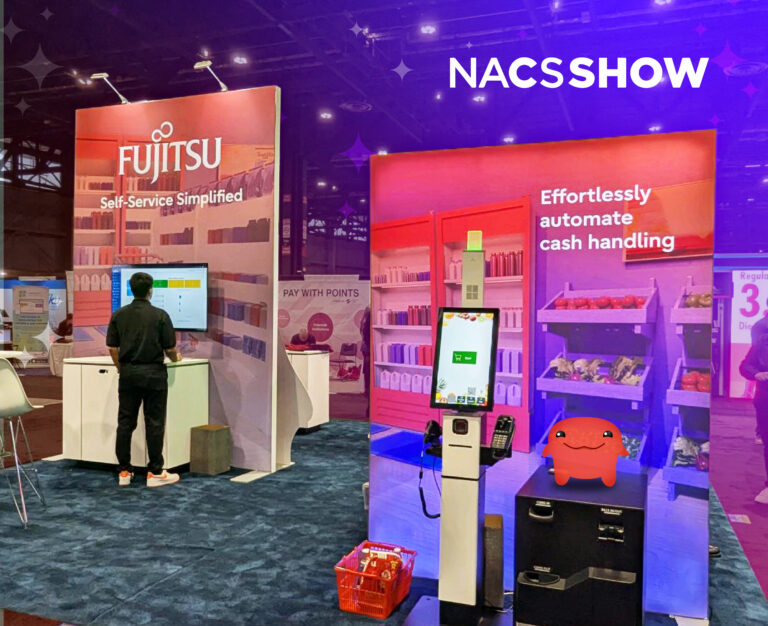
Every grocer faces different operational challenges. Fujitsu offers a complete portfolio of self-checkout solutions built to handle every type of store environment. Whether you’re introducing self-checkout for the first time, expanding an existing deployment, or upgrading your third-party self-checkout systems, Fujitsu’s Self-Service Simplified line provides options that align with store size, traffic volume, and customer preferences.
Effective retail tech for grocery requires visibility into store operations. Fujitsu's software ecosystem provides tools for monitoring lane performance, managing queues, and tracking system health across the front end. These insights help retailers identify opportunities to improve efficiency and make better use of limited labor resources.
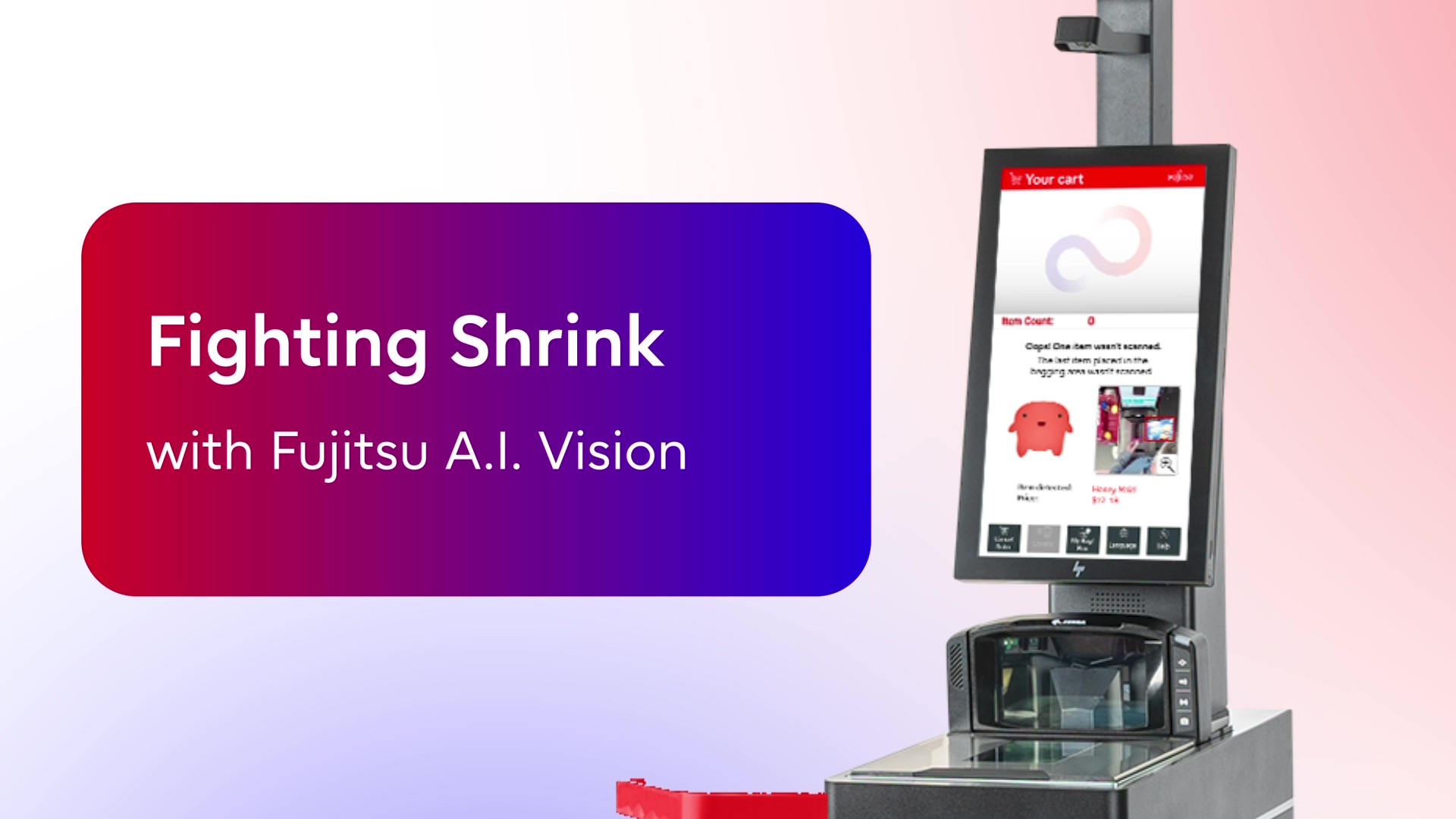
Because a large share of self-checkout shrink is accidental, Friction Positive focuses on reducing false positives that create needless friction. By using contextual signals and transaction history, the system avoids heavy-handed security stops and instead nudges shoppers to correct mistakes. This takes a gentler approach that means customers won’t feel like the store is constantly accusing them of theft.
The labor shortages facing grocery retailers aren’t going away anytime soon. That’s why more grocers are turning to Fujitsu’s proven self-checkout solutions to increase capacity, optimize labor, and create a more resilient operation, transforming self-checkout from a convenience feature into a strategic advantage.
Turn Self-Checkout into a Long-Term Labor Strategy
The grocery labor shortage has created challenges that retailers cannot afford to ignore. Finding and retaining employees remains difficult, labor costs continue to rise, and shoppers still expect fast, convenient experiences every time they visit the store. While self-checkout is not a cure-all, it has proven to be one of the most effective tools available for helping grocers operate more efficiently with the resources they have.
Self-checkout benefits retailers most when the technology is part of a broader strategy to improve throughput, give customers more choice, reduce pressure on store teams, and make better use of available labor. Fujitsu’s Self-Service Simplified line of solutions combines compact, high-performance self-checkout solutions with the operational tools and flexibility grocers need to address today’s labor challenges while building a more efficient front end for the future.
If your stores are struggling with staffing shortages, increasing labor costs, or growing customer demands, now is the time to rethink what’s possible at the front end. Contact Fujitsu to learn how our self-checkout solutions can help you optimize your workforce, improve operational efficiency, and build a checkout experience that works better for both shoppers and store teams.
Ready to see how Fujitsu can help solve your labor challenges? Contact Fujitsu today to schedule a consultation or demo and discover how the right self-checkout strategy can transform your grocery operations.
Optimize Your Business Operations with Fujitsu

Bob Brower
Bob Brower has developed a reputation of diversified technology sales leadership success in software, hardware and services.