

In this article:
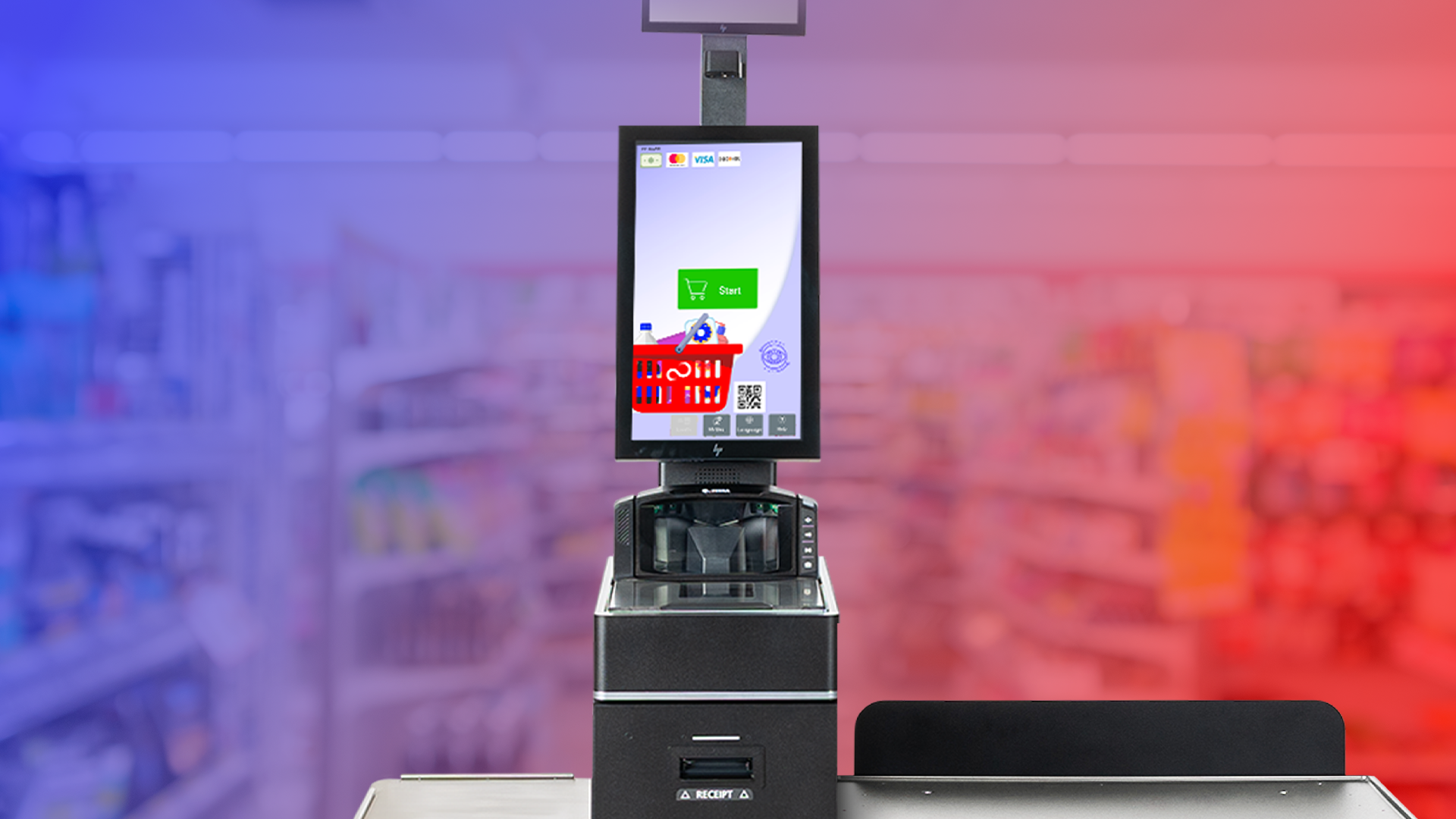
Streamline the self-checkout experience with top-of-the-line hardware and software solutions.
The holiday rush has a way of finding every weak spot in a retail operation, especially your in-store technology.
If your self-checkout station occasionally needs to be restarted, it is likely a minor inconvenience on a normal operating Tuesday. But, during the holidays, it can quickly lead to long lines, frustrated shoppers, and overwhelmed associates.
The weeks before the holiday rush are an important opportunity for retailers to look beyond inventory, promotions and staffing. Store technology deserves a holiday readiness check, too.
Nearly one-fifth of all U.S. retail sales occur during November and December, according to analysis of U.S. Census Bureau retail-sales data. At the same time, retailers continue to operate under labor pressure. In a UKG survey, 83% of retailers expected their stores to be understaffed at least two days per week during the holiday season, while 38% said staffing shortages could lead to longer customer wait times.
With more shoppers performing more transactions without more staff, your store technology faces even more pressure during the holiday season.
Before the holiday rush begins, there are five questions you should be asking to test if your store technology, self-checkout operation, and front-end strategy are ready for the additional workload.
1. Is Your Store Technology Ready for Peak Demand?
It is easy to assume technology is ready when it works during an average shopping day, but the holiday season is not an average shopping day.
A self-checkout station may process hundreds of transactions during a typical day. During a holiday weekend, that volume will likely increase significantly. More transactions mean more opportunities for something to slow down, fail, or require associate intervention.
The front end is more than a self-checkout unit. It is a connected ecosystem that can include:
A problem with any one of these components can affect the customer experience. That is why holiday preparation should start with a technology health check.
Look for the problems hiding in plain sight.
Technology does not have to completely fail to affect the customer experience.
Are some stations slower than others? Are associates frequently restarting equipment? Are payment issues happening at certain times? Are certain devices generating more alerts than others?
These problems may seem small individually. Multiply them across hundreds or thousands of transactions, and they can become a significant operational issue.
For retailers with large self-checkout estates, having visibility into those patterns can make a major difference. Instead of relying on an associate to notice a problem, centralized technology can provide a broader view of what is happening across the front end.
For example, Fujitsu Enterprise software provides centralized visibility into self-checkout devices, alerts, and software and hardware assets, empowering retailers to easily monitor their entire self-service fleet across stores.
That type of visibility can be especially valuable while preparing for the holidays, when identifying a problem quickly can help prevent a small technology issue from becoming a larger operational disruption.

The Holiday Test
Before the holiday season, identify your three most common technology issues.
Maybe it is a payment problem. Is it a scanner that needs to be restarted? Maybe certain self-checkout stations generate more interventions than others.
Now ask:
If the answer is no, that is where your preparation should begin.
If you cannot easily identify your three most common technology issues, that may be the first issue to solve.
2. Can Your Associates Keep Up With the Technology?
Self-checkout may reduce some of the work involved in completing a transaction, but it does not eliminate the need for staff.
In fact, busy shopping periods make associate support even more important.
A customer may need help with a product. Another may have a payment issue. Someone else may accidentally scan an item twice. A fourth shopper may simply not understand what the screen is asking them to do.
When several customers need help at once, even a well-staffed front end can become difficult to manage. That is why self-checkout readiness should include a staffing plan that puts associates where they matter most.
Find out where and when do store staff create the most value.
Retailers should look at historical checkout data and identify when intervention is most likely to happen. That means identifying:
The staffing plan can then follow the demand.
But there is another piece of the puzzle. Associates need to know where help is needed.
Instead of asking associates to constantly watch every self-checkout station, intelligent
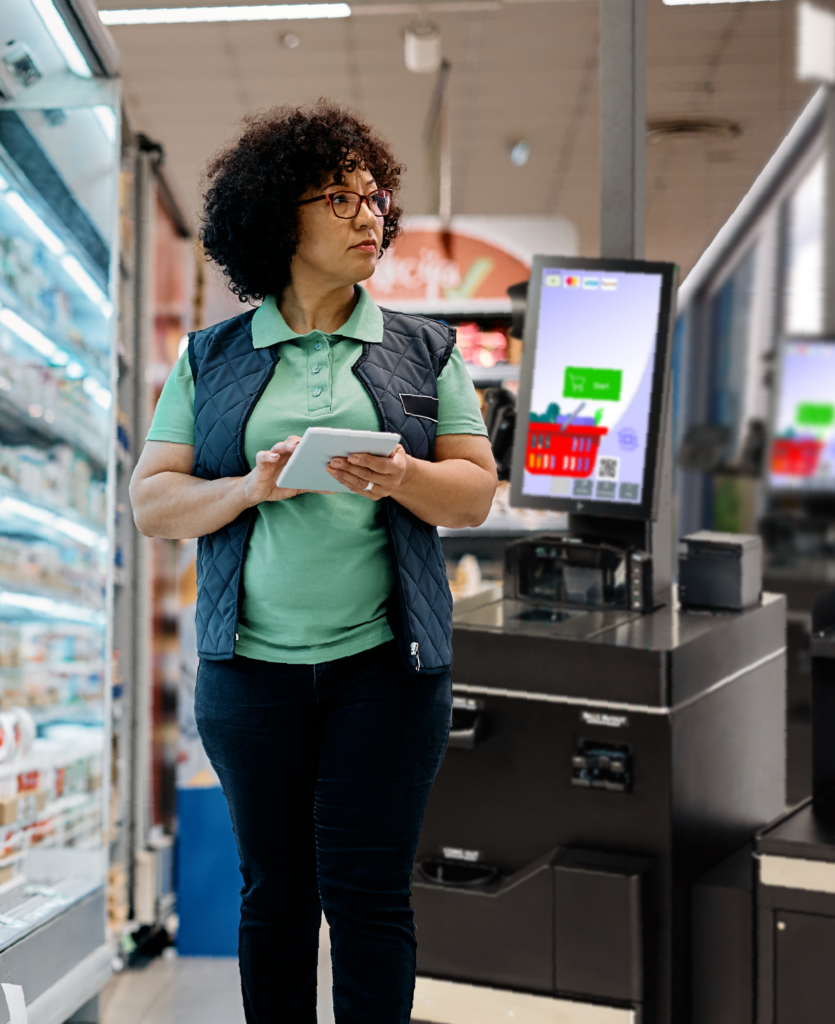
technology can help direct their attention toward situations that require action. For example, Fujitsu Taskforce sends alerts to Taskforce-enabled devices when system, customer, or colleague-driven events occur. This gives store associates actionable information so they can respond when intervention is needed.
This supports a more efficient self-checkout staffing solution, where associates can spend less time monitoring devices and more time helping customers.

The Staffing Test
Take your busiest expected hour of the holiday season. Now, imagine that three customers need help at the same time.

Ask your team:
Then ask:
And finally:
If your answer depends on an associate constantly watching every station, you may have an opportunity to make your self-checkout operation more responsive.
3. Is Your Checkout Experience Actually Easy for Customers?
Retailers often talk about making checkout faster, but a faster checkout experience is not always a good checkout experience.
A transaction can be quick and still feel frustrating if the customer has to stop, think, or ask for help.
Holiday shopping can make this problem worse. Stores are crowded, shoppers may be
carrying more items, and customers are often trying to get through their shopping lists as
quickly as possible. They do not want to fight with the checkout.
Walk through your own self-checkout experience as if you are a shopper.
One of the simplest holiday readiness exercises is to use your self-checkout the way a customer does. If you’re too familiar with the system, have someone with less experience complete a typical transaction.
Pay attention to the moments that make you pause.
Is it obvious what to do next? Are the prompts easy to understand? What happens when you try to check out produce? What happens when something goes wrong? Does an associate have to step in?
These questions can reveal opportunities to reduce friction. But not all friction is bad. Some friction can protect the retailer and empower the shopper.
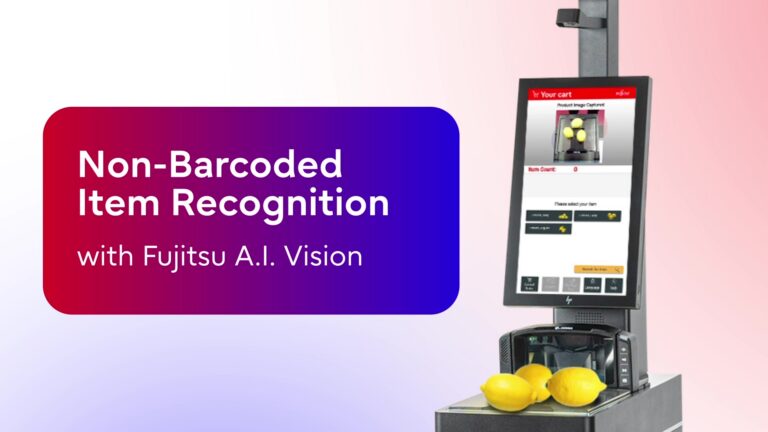
For example, asking a customer to confirm an unusual transaction may prevent an error. Detecting a potential missed scan will reduce shrink. Recognizing a non-barcoded item automatically can eliminate an unnecessary step.
While a lot of store technology providers will have you believe that the objective is to eliminate friction, the goal should be to create smarter friction.
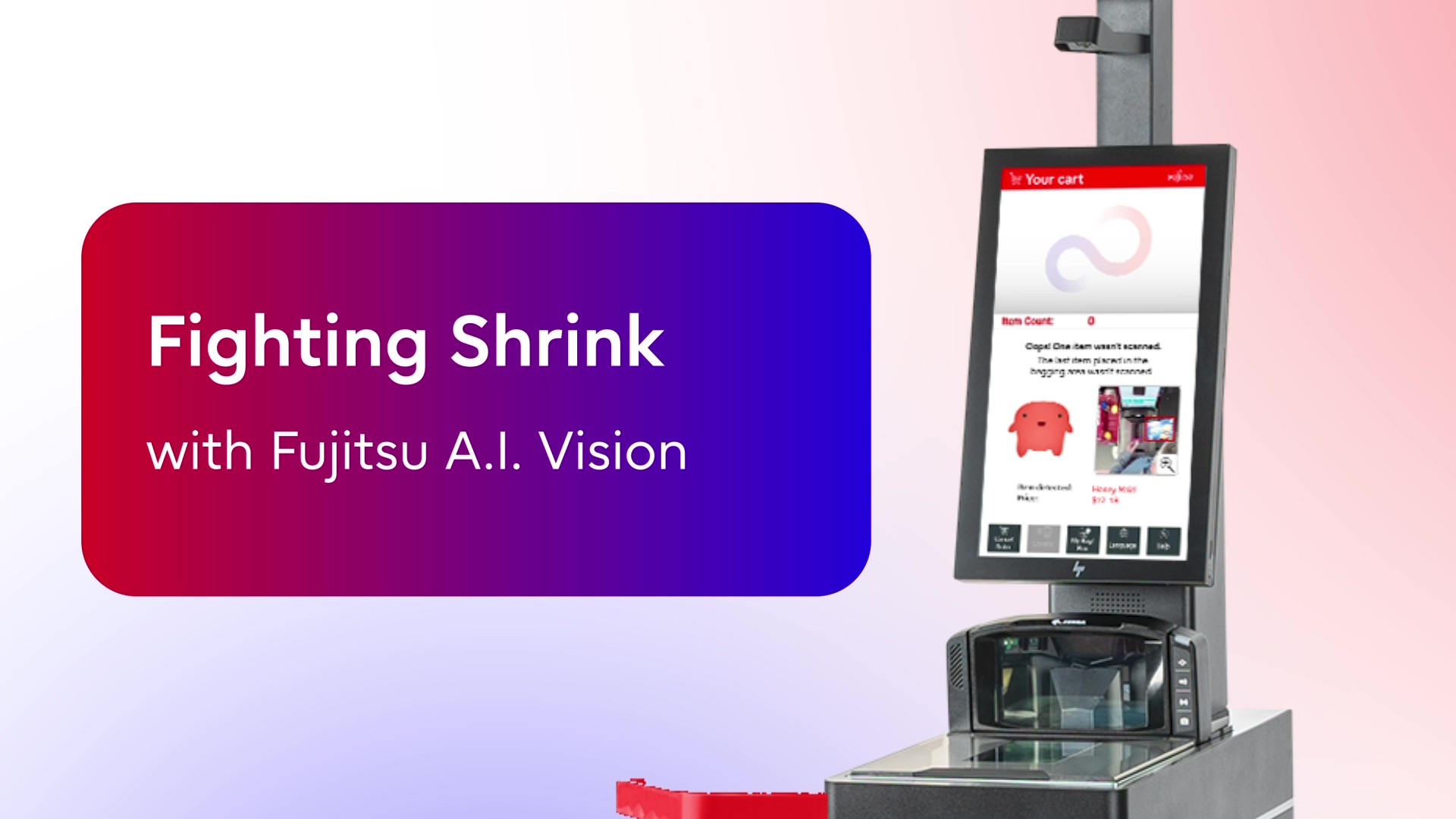
Fujitsu’s Friction Positive approach leverages the power of AI for store technology, providing the right amount of friction at just the right moments to create a better shopping experience for all.
As part of Friction Positive, Fujitsu’s AI for self-checkout technology can quickly identify
non-barcoded products like produce, detect basket- and cart-based loss, and recognize discrepancies such as scan avoidance and barcode-swapping.
Instead of asking customers to navigate more steps, AI can help determine when an intervention is necessary. The result is a checkout experience that feels simpler for legitimate shoppers while providing additional protection for retailers.

The Mystery Shopper Test
Ask someone who does not regularly work with your store technology to complete a typical transaction.

Give them a basket containing different items, such as:
Watch the transaction play out.
Do they know what to do without help? Are instructions easy to understand? Do they know when the transaction is complete? Are there moments of unnecessary friction?
These questions can reveal problems that a technical test may not.
4. Can You See What is Happening Across the Front End?
A busy store can create another problem that has nothing to do with a lack of data. There is
simply too much happening at once to see the full picture.
An associate knows what’s happening at the self-checkout stations in front of them. A store
manager sees the lines forming at the front end. The IT team can see store technology alerts coming from individual devices. But those pieces of information do not always come together.
That becomes especially important during the holidays, when one small problem can quickly create ripple effects across your entire operation.
To get a clear view, you must be able to turn data into action.
Retail technology can help retailers see these patterns more clearly.
Instead of simply collecting reports, the goal is to turn operational data into information that people can use. That might include:
The value comes from what retailers can do with that information.
If one store consistently needs additional support between 5 p.m. and 7 p.m., staffing can be adjusted around that demand.
If a group of stations is generating an unusually high number of alerts, maintenance can be scheduled before the problem gets worse.
If the same issue starts appearing across multiple locations, retailers can investigate the problem at a broader level instead of waiting for each store to report it individually.
Clearly, centralized store technology can be valuable. Fujitsu Enterprise is designed to give retailers greater visibility across their self-checkout fleet, including device status, alerts, assets, software, and performance information.
That visibility can help retailers move from reacting to individual problems to identifying patterns across the operation. During the holiday season, that extra visibility can make a meaningful difference.
The sooner a retailer can see a problem, the sooner they can do something about it.

The Visibility Test
Think about a technology issue that recently impacted one of your stores. Now, imagine the same problem happens at 20 stores tonight.

Ask:
Then ask:
And finally:
If the answer requires multiple phone calls, emails or manual reports, your organization
may have a visibility gap.
5. What Happens When Something Goes Wrong?
Eventually, something will go wrong.
That is not a criticism of your technology. It is reality.
A payment terminal may stop responding. A self-checkout station may go offline. A network
connection may become unstable. A customer may encounter a problem that an associate has never seen before.
The question you should be asking is “How quickly can my store recover?”
During a normal shopping day, there may be plenty of time to work through the problem.
During the holiday rush, every minute counts.
That is why you should be creating a clear response plan in place before the holiday rush.
The process should be simple enough that even a seasonal employee can follow it without
needing to understand the technology behind the entire checkout system.
Fujitsu Enterprise management capabilities can help retailers manage their self-checkout
fleet from a centralized environment. Enterprise technology makes it easier to monitor device health, manage software updates, identify issues, and maintain consistency across your entire self-checkout fleet.
It also means retailers can spend less time reacting to individual technology problems and
more time managing the overall performance of their self-checkout environment.

The Five-Minute Failure Test
Imagine it is the busiest hour of the holiday season.
A self-checkout station goes down, and shoppers are already waiting.

Give your team five minutes to walk through what happens next:
If your team cannot answer those questions quickly, the problem may not be the
technology.
The best time to figure out how to handle a technology problem is before a customer is standing in front of it.
The Holidays Are Coming. Is Your Retail Technology Ready?
The holiday rush is coming. When it arrives, your store technology will be put to the test.
The best time to find a slow checkout, recurring technology issue, or staffing bottleneck is
before shoppers are waiting in line.
Use these five steps as a starting point. Test your technology, prepare your associates, walk
through the customer experience, improve your visibility, and make sure your team has a plan when something goes wrong.
Then take a closer look at the technology supporting your front end.
Fujitsu Frontech North America’s retail technology portfolio brings hardware, software, AI and centralized management together to help retailers create a more connected self-checkout environment.
Contact us today and we’ll help you make sure your store technology is ready for the holiday rush.
Optimize Your Business Operations with Fujitsu

Bob Brower
Bob Brower has developed a reputation of diversified technology sales leadership success in software, hardware and services.