
In this article:
Take control of friction and deliver intuitive experiences to customers that keeps driving adoption
Retail self-checkout has come a long way. What started as a novelty for tech-savvy shoppers has quickly become a preferred way to pay for millions of people around the world. Whether it’s scanning groceries at a self-checkout machine, checking out with a smartphone, or walking out of a store with AI-powered vision systems doing the work, shoppers are increasingly taking control of their own checkout experience.
But as self-checkout becomes more widespread, so do the growing pains associated with it. We’ve all been there—the flashing red light, the “unexpected item in the bagging area,” or the awkward pause waiting for assistance. These moments of friction remind us that while automation has made retail faster, it’s also introduced new frustrations.
The challenge now isn’t just about creating less friction; it’s about creating the right type of friction at the right time to deliver memorable shopping experiences. Retailers are rethinking the idea of “frictionless” checkout, focusing on better technology, using friction strategically, and gaining a deeper understanding of shopper behavior to make self-checkout more shopper focused.
Why Friction Matters in Retail Self-Checkout
“Friction” is anything that slows or complicates a shopper’s progress through the checkout journey. In a retail self-checkout context, friction can be:

A scanner that fails to read a barcode or an item with no barcode.

Confusing on-screen prompts or unclear bagging requirements.
Interventions by staff that arrive too late (or too often), and force additional waiting.

Security checks that are blunt and disruptive instead of targeted.
These small annoyances add up. Shoppers expect speed at checkout. When the system stalls, they get frustrated. That frustration translates to longer transaction times, reduced throughput, and abandonment or negative sentiment about the store.
Several surveys show how speed and ease of use at self-checkout define shopper preferences. In a 2024 consumer survey, 77% of shoppers who chose self-checkout said they did so because it’s faster. Many others cited shorter lines and the ability to bag items themselves.
The growth of self-checkout at retail stores has happened at the same time as an increase in theft and shrink. Industry studies show higher shrink at self-checkout lanes compared to traditional cashiered lanes, calling for more nuanced approaches to security and intervention.
How Self-Checkout Friction Impacts Shopper Satisfaction
The link between checkout friction and cart abandonment is well established. When checkout feels slow, confusing, or uncertain, shoppers quickly tend to question if finishing their purchase is worth it.
In e-commerce research, confusing or lengthy checkout processes are one of the top drivers of cart abandonment. Simple and clear checkout flows keep more shoppers buying. Retail stores can reasonably expect similar shopper habits to apply when self-checkout doesn’t work smoothly.
For retail self-checkout, friction shows up in a few common ways:
A single confusing prompt can add 30–60+ seconds to a transaction, bottlenecking lanes during peak times.
Staff must stop revenue-generating tasks to help shoppers check out, which creates new challenges for other customers and costs valuable labor.
A “self-checkout fail” during the last moments the shopper is in the store can badly damage brand perception.
Shoppers may leave items and exit the store or postpone purchases for a later visit.
Friction at self-checkout can have a ripple effect throughout the store environment. Research into real-world store operations and worker surveys show that self-checkout usage in understaffed stores increases stress for store staff and introduces more conflicts for shoppers.
Steps Retailers Take to Avoid Friction at Self-Checkout
Retailers aren’t helpless when it comes to preventing friction at self-checkout. There are research-supported, practical strategies to reduce harmful friction while preserving the benefits of automation:
Apply Targeted, Intelligent Interventions (Don’t Blanket Block)
Rather than blanket bans or blunt security steps that interrupt all shoppers, A.I. computer vision and analytics can detect likely errors or unusual behavior and trigger helpful, targeted prompts only when needed.
Case studies and research show that applying interventions only when A.I. and/or analytics detect patterns that indicate an issue reduces false alarms and attendant interventions.
Improve UI/UX to Reduce Cognitive Load
Checkout screens that use simple, clear language and show only what shoppers need right now help them to quickly fix mistakes on their own. E-commerce research shows that shorter, simpler forms make people less likely to give up. These same concepts are now being used for in-store self-checkout to make the process simpler.
Blend Human and Digital Assistance
More retailers and self-checkout technology providers are taking a hybrid approach to checkout. Combining in-store attendants with digital prompts and remote support, the checkout process becomes more seamless. When attendants get guidance from analytics on where help is most needed, they spend less time on small issues and more time helping shoppers who really need it.
Treat Shrink as Accidental and Design for Recovery
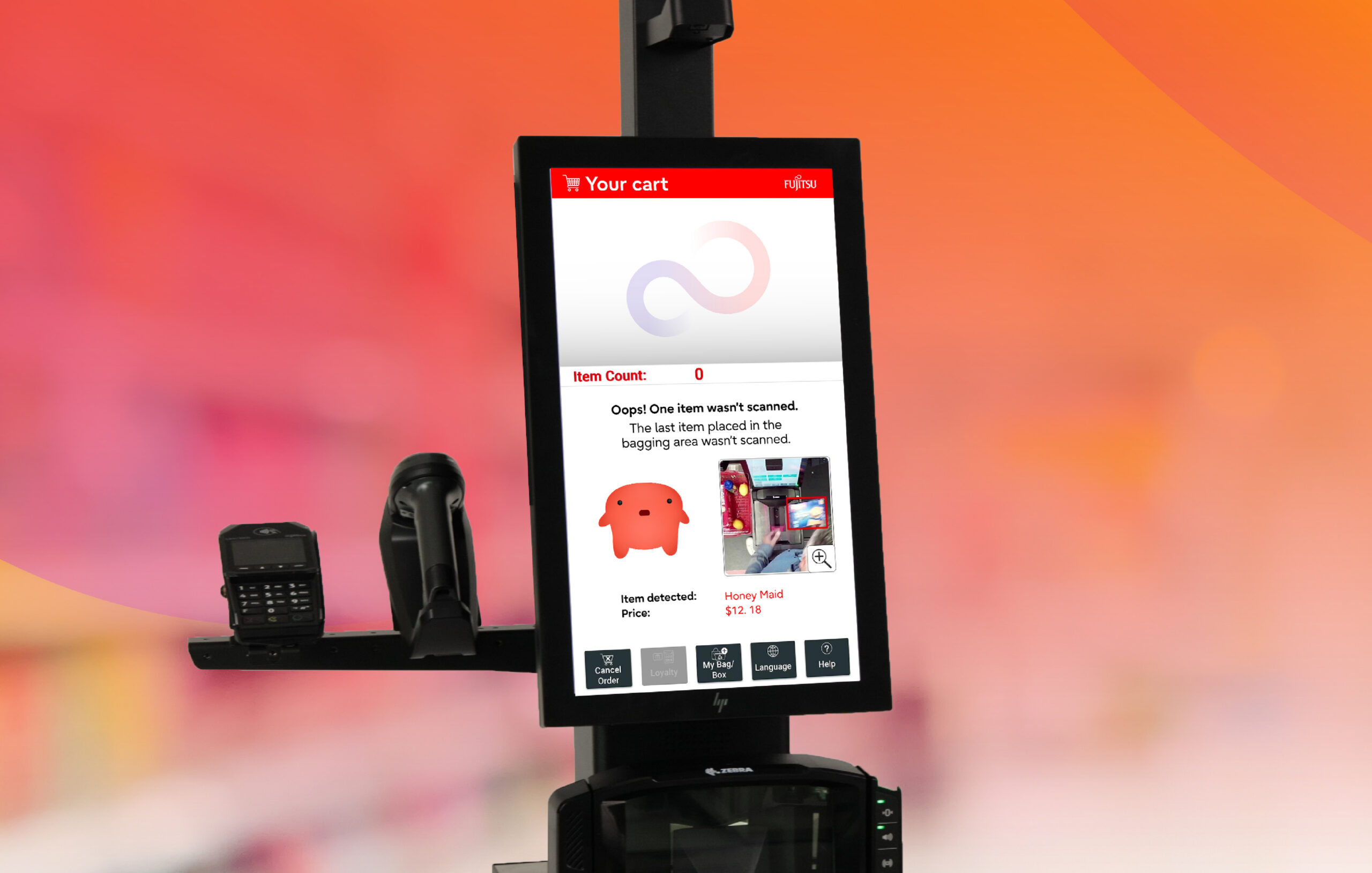
Research from loss-prevention experts shows a large portion of shrink at self-checkout is accidental (wrong PLU, missed barcode, bagging mismatch) rather than intentional theft. Self-checkout solutions that help shoppers self-correct accidental errors, such as automatic product recognition or “nudge” prompts, address a major source of shrinkage without alienating customers.
Use Data to Optimize Station Mix and Placement
Retailers who have successfully deployed self-checkout use transaction analytics to decide how many SCO units to deploy, where to locate them, and when to open staffed lanes. Data-driven store design reduces queues and minimizes the friction that comes from overloaded self-checkout.
Fujitsu’s Friction Positive: Turning Insights into Better Self-Checkout
Fujitsu’s Friction Positive approach to self-checkout puts these research-backed strategies into action in a clear and practical way. Instead of chasing the myth of “eliminating friction” at checkout, it uses A.I. and analytics to strategically add friction where it helps and remove it where it slows things down.
This helps balance loss prevention, speed, and shopper satisfaction. Here’s what that looks like in stores:
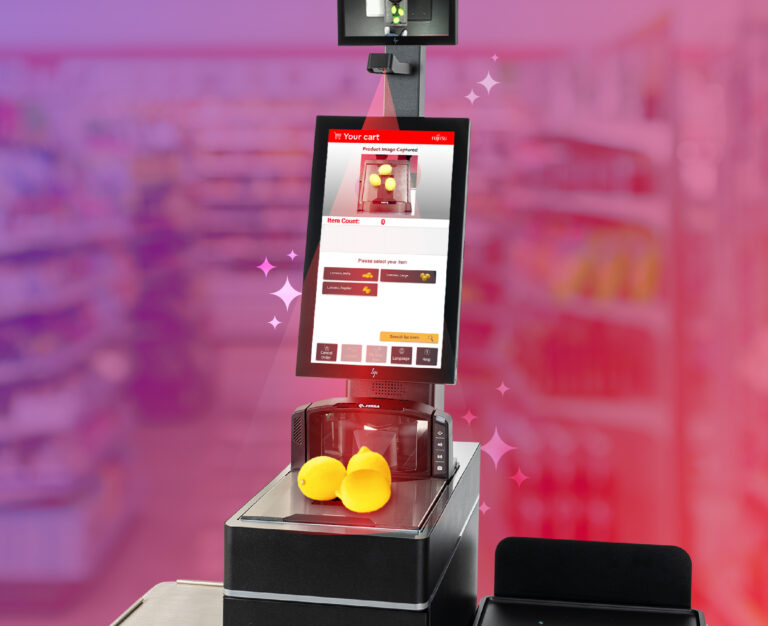
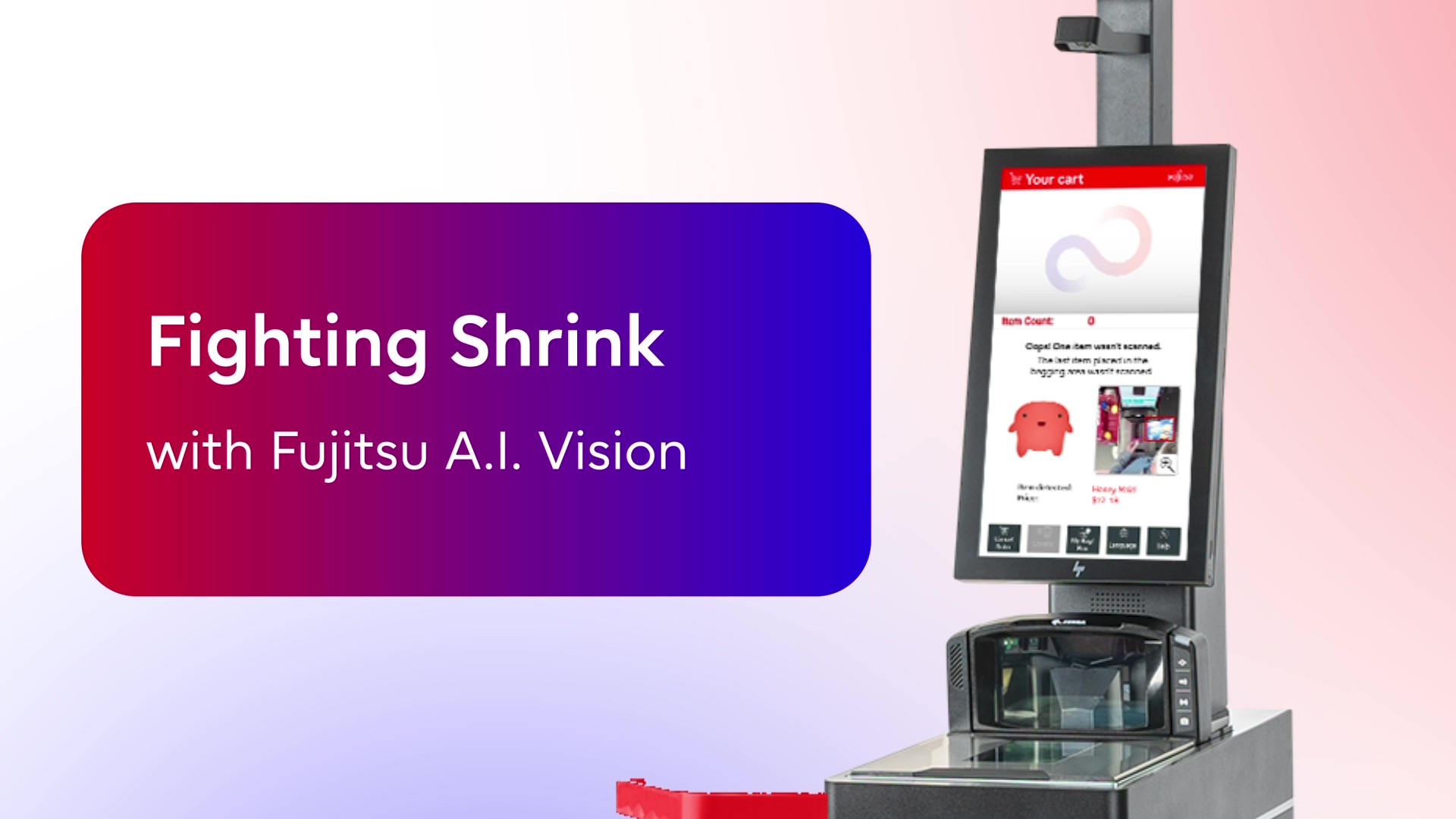
Friction Positive applies A.I. models and analytics to detect common, correctable issues in real time. Instead of stopping the entire transaction for a generic security check, the system issues micro-prompts (i.e. “Please place the item in the bagging area” or “Did you mean Product X?”) that let shoppers self-fix errors quickly. This reduces the total number of attendant interventions and shortens transaction time when corrections are needed.
When staff assistance is required, Friction Positive ranks interventions by priority so attendants respond to the most impactful problems first. That means fewer interruptions for routine or accidental issues and faster resolution for true exceptions. In turn, this improves throughput and staff productivity. The effect is lower perceived friction for most shoppers, and more targeted support for the few who need it.
Because a large share of self-checkout shrink is accidental, Friction Positive focuses on reducing false positives that create needless friction. By using contextual signals and transaction history, the system avoids heavy-handed security stops and instead nudges shoppers to correct mistakes. This takes a gentler approach that means customers won’t feel like the store is constantly accusing them of theft.
The Business Case for Faster, Smoother, and Safer Self-Checkout
Shoppers are using retail self-checkout more than ever, with most adults trying some form of self-checkout or mobile scanning. As a result, retailers are investing heavily in new systems. But this will only work if retailers can balance friction at self-checkout. Speed and convenience keep shoppers happy, while confusing or slow systems make them leave or get frustrated.
Fujitsu’s Friction Positive reframes the conversation. Rather than asking “how do we remove every point of friction?” retailers can ask “where will a nudge or brief assistance protect both the shopper and the store? And how do we deliver that help seamlessly?”
The evidence shows this approach is not only better for shoppers, but it’s better for retailers’ bottom lines. The result is fewer false alarms, fewer lengthy attendant interventions, lower shrink, and happier customers.
Use Self-Checkout Friction as a Tool, Not a Problem
The discussion around retail self-checkout often swings between extremes: it’s either a “frictionless revolution” or a “self-checkout fail.” The reality is more nuanced. Friction isn’t simply good or bad. When applied thoughtfully, the right amount of friction at the right time can help reduce errors, prevent loss, and improve the overall shopping experience.
Fujitsu’s Friction Positive approach puts this principle into action. By leveraging A.I. technology to provide helpful prompts, guide staff to handle interventions quickly, and continuously optimize the system with data, retailers can create self-checkout experiences that are fast, secure, and shopper focused.
For retailers looking to make self-checkout work today and into the future, the takeaway is clear: use technology that applies friction where it adds value and removes it where it slows shoppers down unnecessarily. This approach turns self-checkout from a simple cost-saving tool into a channel that truly meets customer needs.
Let us help your store start delivering smarter, more shopper-focused self-checkout now! Contact us today to learn more about Friction Positive.
Unlock the Future of Retail with Fujitsu

Bob Brower
Bob Brower has developed a reputation of diversified technology sales leadership success in software, hardware and services.