
In this article:
Take control of friction and deliver intuitive experiences to customers that keeps driving adoption
Self-checkout was supposed to make shopping easier.
For many shoppers, it delivers exactly that. But when self-checkout goes wrong, the experience can change in seconds.
An item will not scan. A shopper can’t find the right barcode. An employee is nowhere to be found. Suddenly, a transaction that should take a minute becomes a frustrating exercise in troubleshooting.
For retailers, these moments create a difficult balancing act. They need to protect merchandise, manage labor, and keep transactions moving. Shoppers, meanwhile, expect checkout to be convenient, intuitive, and fair.
Getting that balance right starts with understanding that self-checkout is not just a transaction. It is a critical part of the retail customer experience.
For example, 50% of shoppers who use self-checkout said they like it because it’s faster than using a cashier, according to research firm Service Management Group. Another 52% cited shorter lines.
The opportunity is clear. Shoppers value convenience, but retailers still need to make the experience work in ways that are meaningful for their customers.
To help you create a self-checkout experience that helps build customer trust and encourage shopper loyalty, here are 10 practical tips:
1. Give Shoppers a Choice of How They Check Out
According to a Raydiant report, 60% of surveyed consumers preferred self-checkout over manned lanes. The technology appeals to a substantial portion of shoppers.
But not every shopper wants the same experience.
Someone buying a few items may want to get through self-checkout as quickly as possible. A customer with a full cart may prefer a cashier. Another shopper might be comfortable with self-service, while others may be hesitant to try using technology on their own.
Retailers should account for those differences instead of assuming one checkout format works for everyone.
Offer a mix of staffed and self-service options based on store size, customer traffic, and shopping habits. Flexible checkout configurations can also help retailers adapt when demand changes throughout the day.
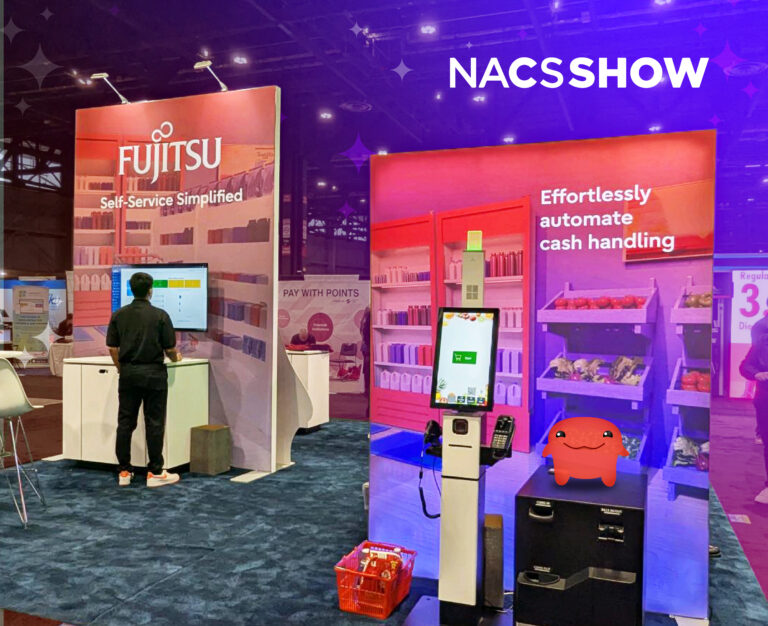
For example, Fujitsu Frontech North America’s self-checkout portfolio is designed to meet the needs of each retailer’s unique in-store environments. S3: Self-Service Simplified empowers retailers to select different configuration options for new and existing self-checkout ecosystems.
As a retailer, you should not push shoppers toward automation if they resist it. The best way to introduce self-checkout is to offer it alongside traditional, staffed lanes, giving every shopper the flexibility to choose the experience that feels right for them.
Why it builds trust:
Shoppers are more likely to feel in control when they have options instead of being forced into a checkout experience that does not suit them.

2. Make the Technology Easy to Understand
Shoppers should not need a tutorial to buy groceries. Yet so many self-checkout solutions have confusing prompts, complicated menus, and unclear instructions.
When shoppers are confused, a simple transaction feels unnecessarily difficult.
Consider a shopper who accidentally places an item in the bagging area before scanning it. A message that simply says “Unexpected item” does little to explain what happened or what to do next. But clear instructions can make the same situation much easier to resolve.
Retailers should keep these three questions in mind when reviewing their self-checkout interfaces:
Simple language, readable text, intuitive navigation, and consistent prompts all help reduce uncertainty.
Fujitsu’s Friction Positive philosophy offers another way to think about interface design. Not all friction is bad. Sometimes an additional step is useful for confirming an item, preventing an error, or protecting your store’s bottom line.
A verification prompt that prevents a genuine problem can be useful. The important thing is making sure that each interruption has a clear purpose.
As part of Friction Positive, POSi is a fun, interactive attendant at checkout designed to provide visual and auditory prompts only when necessary, giving shoppers the right amount of guidance at the right time so they can complete transactions with confidence.
Why it builds trust:
Customers do not need to understand the technology behind self-checkout. They need to understand how to use it.
3. Use AI to Identify Problems Before They Escalate
A missed scan at self-checkout creates a delicate balance that retailers must navigate. Retailers must protect their bottom line but also must be careful not to make shoppers feel accused or confused.
The key is how the retailer responds.
Computer vision and AI technology are helping retailers address these potential problems without relying entirely on manual monitoring and confrontations with customers.
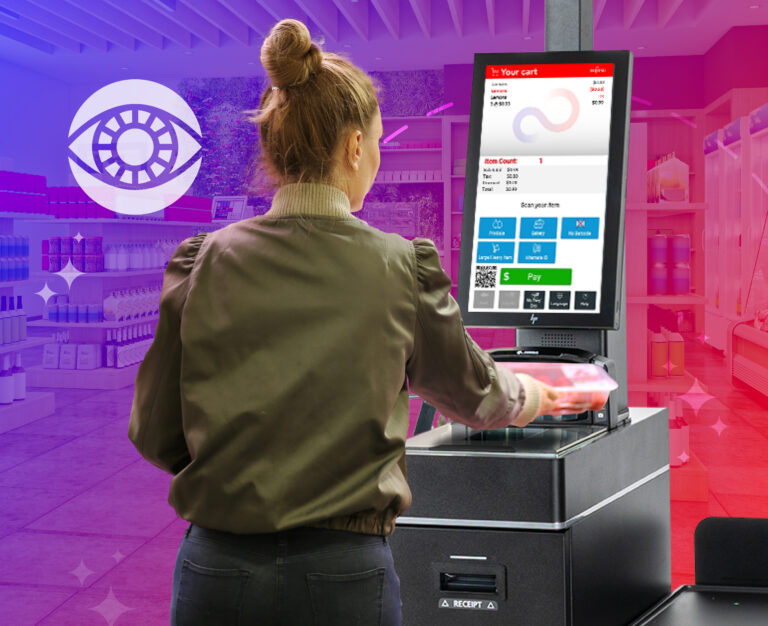
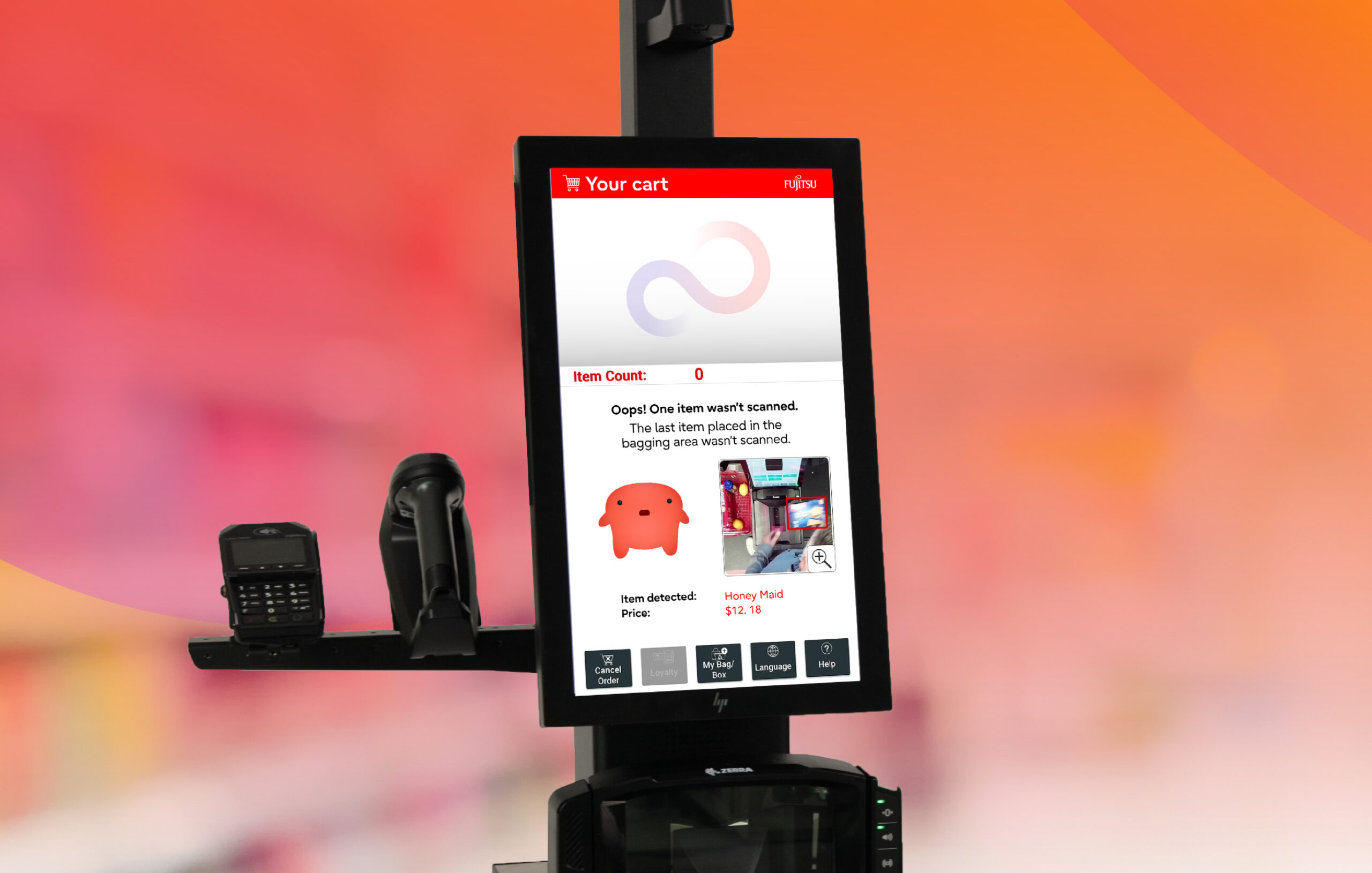
For example, imagine a shopper who accidentally overlooks just one item while scanning their entire basket. An intelligent checkout system equipped with AI can flag the potential missed scan so the situation can be addressed either by the shopper themselves or by alerting store staff. Rather than accusing the shopper of stealing, on-screen guidance or in-store attendants can then notify the shopper of the missed scan and invite them to correct the issue.
An alert does not automatically establish intent. Shoppers make mistakes, products can be difficult to scan, and technology can misinterpret what happened. Retailers should use appropriate verification and associate support rather than treating every flagged event as evidence of wrongdoing.
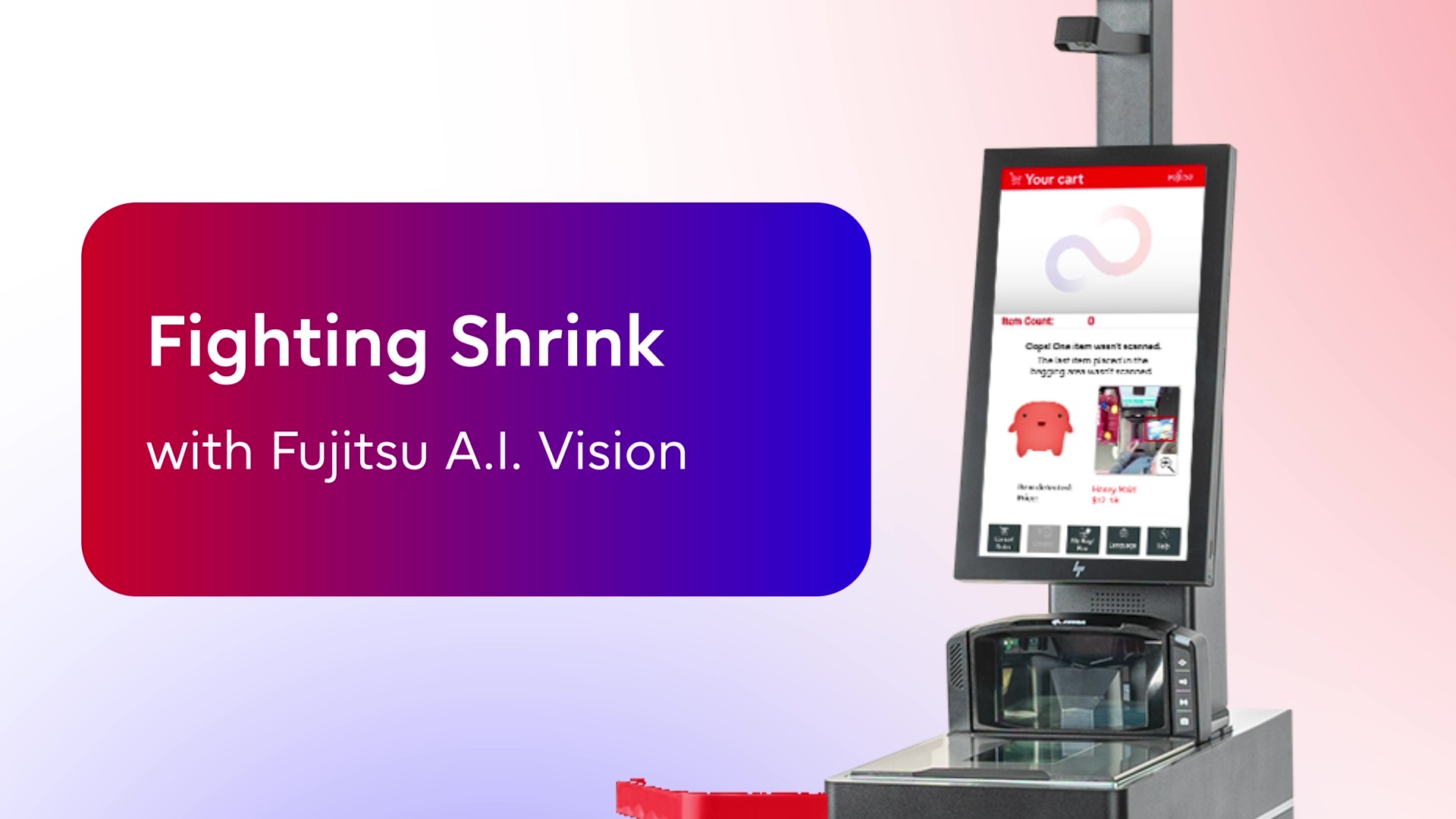
AI technology, such as Fujitsu’s U-SCAN Vision, helps recognize transaction irregularities and identify situations that may need attention. Retailers should evaluate where AI-based detection could help, and establish clear procedures for resolving alerts fairly.
Why it builds trust:
Technology can help protect the transaction while giving honest shoppers a straightforward way to correct mistakes and continue checking out.
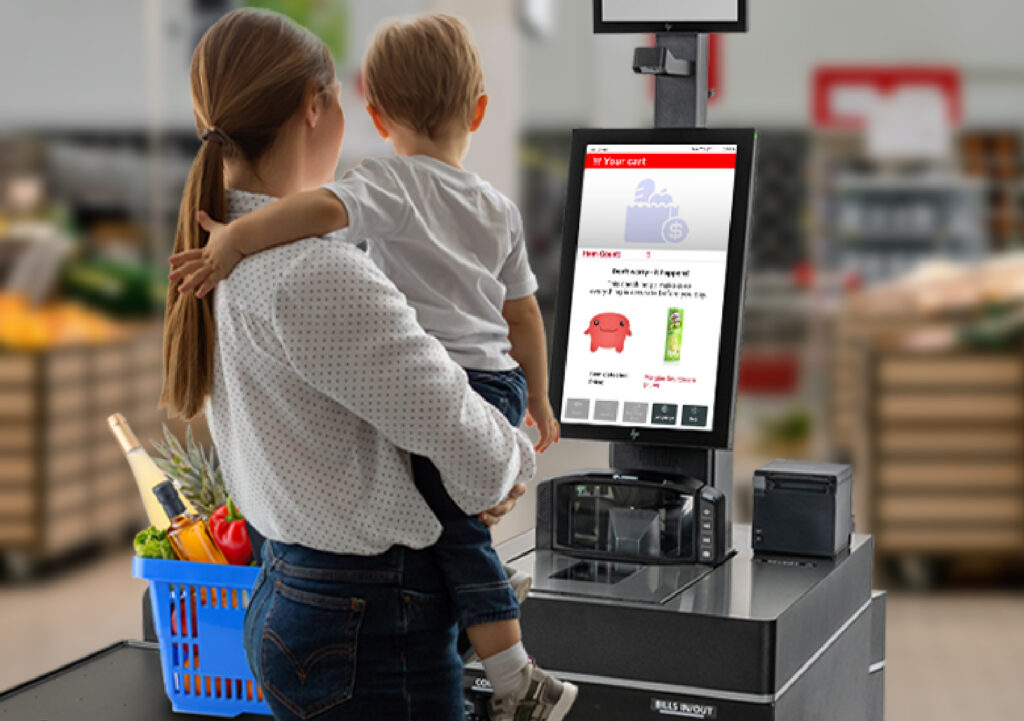
4. Make Produce and Other Tricky Items Easier to Scan
Not only can AI technology help identify discrepancies at checkout, it can also make non-barcoded items like produce easier to buy.
The process of buying non-barcoded items like produce has always been frustrating, especially at self-checkout. Non-barcoded items can quickly turn a routine transaction into a frustrating search through menus. And the more steps a customer has to complete manually, the more opportunities there are for mistakes and delays.
Retailers can streamline non-barcoded item checkout by simplifying product lookup and weighing processes at self-checkout and beyond.
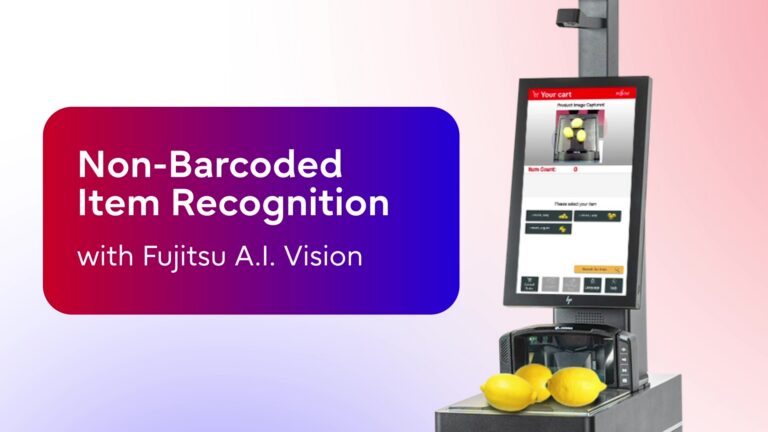
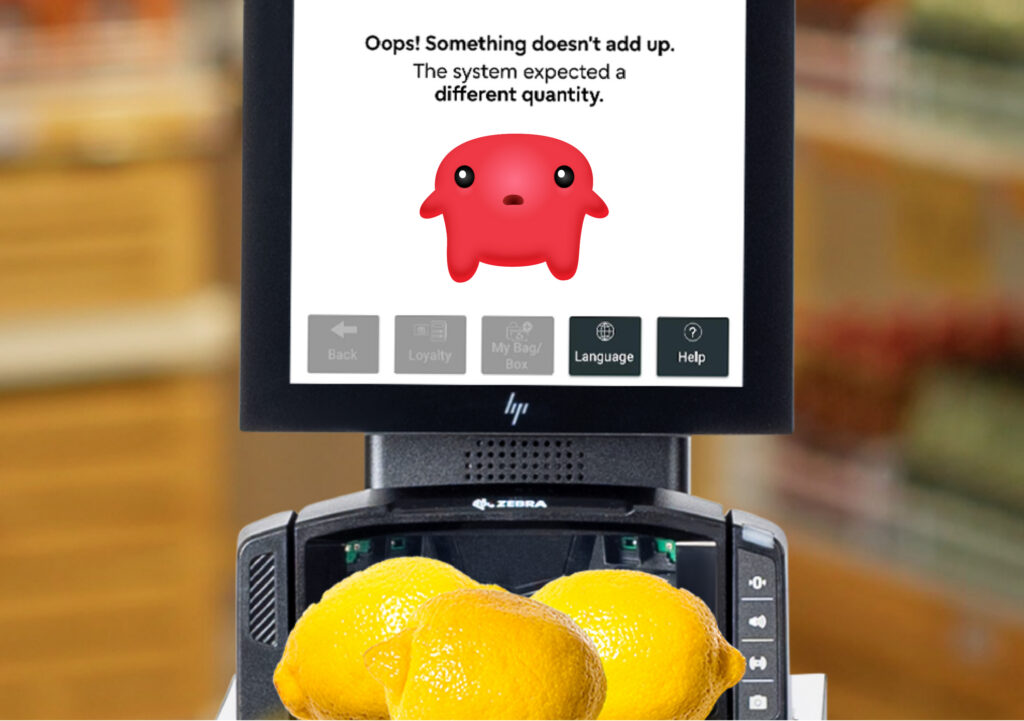
AI-powered item recognition can determine item type and quantity and make sure shopper inputs are accurate. There are even in-aisle solutions like U-SCAN VisionScale, which can identify and weigh non-barcoded items and then print a barcode sticker that can be easily scanned for a quick checkout experience.
Rather than making customers navigate a long list of products, retailers can help shoppers identify the item and keep moving.
Retailers should also examine their own checkout data. If particular products repeatedly generate errors or assistance requests, those patterns can reveal where item recognition, clearer instructions, and improved product data could help.
Review the items that cause the most friction, test recognition capabilities against real store conditions, and make sure the system provides a clear path when it cannot confidently identify an item.
Why it builds trust:
The easier it is to handle everyday shopping tasks, the less likely customers are to associate self-checkout with frustration.

5. Make Getting Help Feel Easy
Self-checkout does not mean shoppers should have to solve every problem themselves.
In Zebra’s 17th Annual Global Shopper Study, 71% of shoppers expressed concern about the lack of help associates could provide. The same study found that 82% of associates said it was difficult to find help or receive timely support when needed.
These findings point to a problem that goes beyond the checkout machine. Shoppers need assistance, and employees need practical ways to provide it.
Retailers must find ways to make help requests easy to initiate and use alerts to prioritize assistance for store staff.
Event-driven communication systems such as Fujitsu’s Taskforce solution support alerts that notify associates about relevant events in the self-checkout environment and automatically prioritize them based on needs.
For example, when a transaction requires intervention, an alert can help direct an associate to the appropriate station rather than leaving the shopper waiting for someone to notice the problem.
Of course, technology alone cannot guarantee a quick response. Retailers still need appropriate staffing, clear responsibilities, and employees who know how to resolve common checkout issues.
Why it builds trust:
Knowing that help is available makes self-service feel less like being left on your own.
6. Balance Loss Prevention with a Respectful Customer Experience
Retailers have good reason to take self-checkout security seriously. Data from Capital One Shopping Research shows that overall theft increases by up to 65% at self-checkout compared to traditional staffed lanes.
The challenge is to protect merchandise without creating unnecessary tension. Aggressive or poorly designed interventions can make honest shoppers feel as though they are being treated like suspects.
That is why retailers need to integrate intelligent detection and thoughtful intervention that works together to provide loss prevention without making shoppers feel uncomfortable.
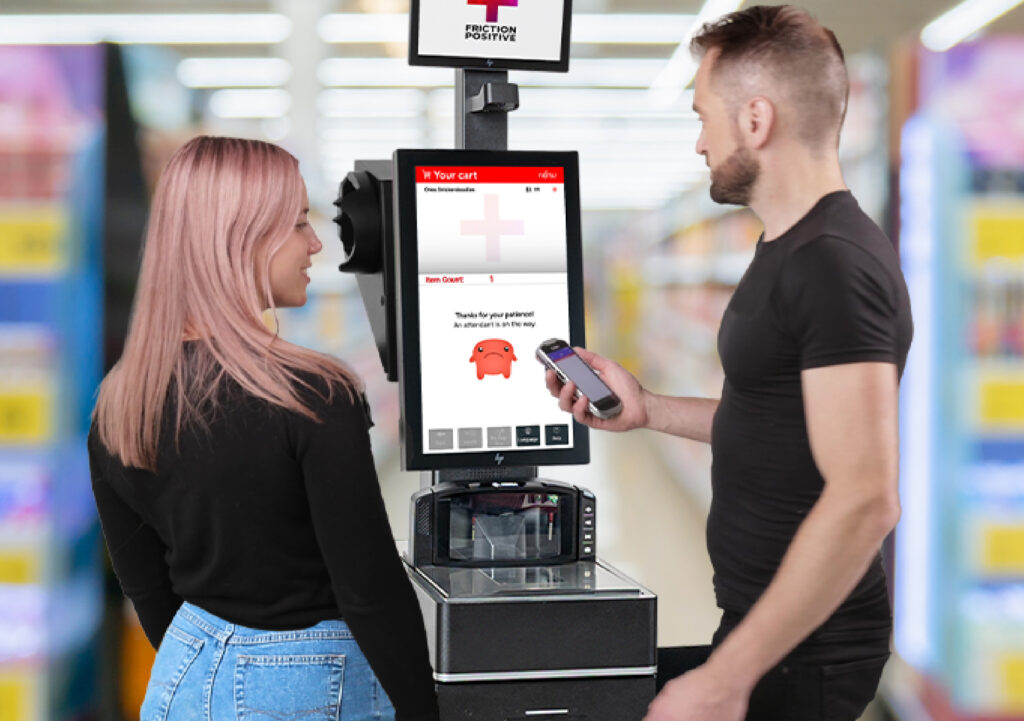
Fujitsu’s Friction Positive approach is a perfect example. AI-based transaction monitoring helps recognize discrepancies at checkout, but a friendly, meaningful intervention from POSi helps drive the transaction forward without making shoppers feel accused.
POSi is like a virtual “cashier” that helps connect shoppers with the technology they are using. Different situations can require different responses. The goal is to make the checkout experience more responsive to what is happening during a transaction.
Instead of trying to eliminate friction, retailers should be trying to introduce friction when it serves a purpose.
Why it builds trust:
Security and customer service are not opposing goals. A well-designed system can help retailers protect inventory while treating shoppers fairly.
7. Give Associates the Tools to Make a Difference
Automation can handle many routine tasks, but it cannot eliminate every situation that requires human judgment.
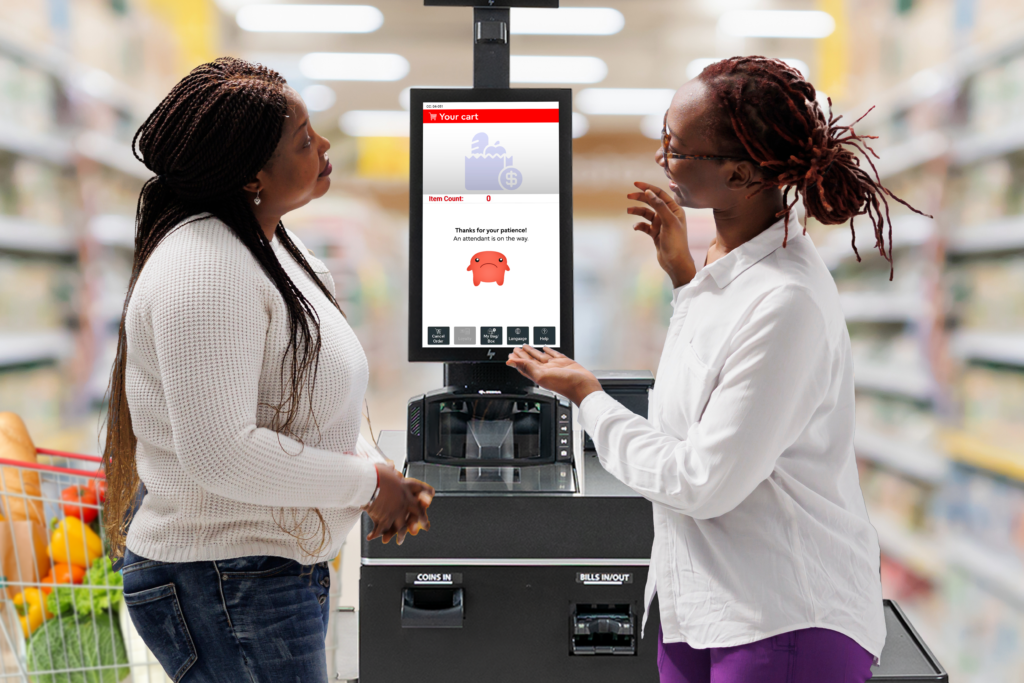
At self-checkout, there are many times during a transaction where shoppers may need help: making a payment, buying age-restricted products, or simply seeing a confusing prompt. These interactions are opportunities to reinforce customer trust, and in order to gain shopper trust, attendants must respond quickly.
That is why retailers need to give associates the right tools, useful information, clear escalation procedures, and training that emphasizes both loss prevention and customer service.
Employee-facing technology can be just as important to the checkout experience as the technology shoppers see. In fact, Zebra’s Global Shopper Study found that nearly 90% of retail associates believed mobile technology could help them provide a better customer experience.
Simplifying communication and helping staff prioritize tasks should be a major driving factor for retailers adapting technology for associates. Fujitsu Taskforce provides relevant alerts so that store associates can provide proper support where and when issues arise for shoppers.
Retailers should complement these tools with practical training. Associates need to know how to explain common interventions, respond to frustrated shoppers, and distinguish routine mistakes from situations that require additional review.
Why it builds trust:
The best technology helps employees spend less time figuring out what went wrong and more time helping shoppers.
8. Measure the Checkout Experience, Not the Transaction Speed
Speed is one of self-checkout’s biggest selling points. But transaction time alone does not tell the whole story.
A shopper might scan every item quickly and then wait several minutes for an associate to approve an intervention. Another might complete a transaction in record time but leave frustrated by confusing instructions.
Retailers need to understand the entire journey, from the moment a shopper approaches the checkout to the moment they leave.
Useful metrics include:
To truly understand what’s happening at self-checkout, retailers need the ability to see and analyze data on their entire self-checkout fleet. This allows them to establish a baseline, identify the most disruptive checkout problems, and track whether changes improve efficiency and customer satisfaction.
Consider a store where one self-checkout unit generates substantially more assistance requests than others. Reviewing device health and operational patterns could help determine whether the problem involves equipment reliability, a recurring workflow issue, or a particular type of transaction.
Fujitsu Enterprise is a centralized management platform for self-checkout fleets, featuring an easily accessible web-based dashboard for device status monitoring, alerts, and operational information. These capabilities can help retailers identify recurring equipment issues and understand where support may be needed.
Why it builds trust:
A reliable checkout experience is easier for shoppers to trust than one that only works some of the time

9. Offer More Ways to Shop and Pay
Sometimes, you have to think outside the box. Self-checkout does not have to begin at a self-checkout unit. With today’s technology, you can allow shoppers to scan items on a device they are most familiar with: their own mobile phones.
With technology such as U-Shop Mobile, shoppers can scan items as they move through the store, then quickly and easily complete the transaction at checkout.
For the right store environment, this can create another option for shoppers and change how queues are impacted at self-checkout. It also eliminates any frustration involved with trying to adapt to new devices.
But the broader lesson is to evaluate checkout options around customer needs rather than assuming every shopper should use the same process.
Mobile self-service may not be the right answer for every shopper or retailer. Store layout, shopper preferences, payment workflows, and loss-prevention requirements all matter. Evaluate checkout formats that make sense for your store and make sure customers understand how each process works.
Why it builds trust:
Flexibility gives shoppers more control and helps retailers accommodate different shopping habits.

10. Treat Self-Checkout as an Ongoing Improvement, Not a One-Time Installation
Installing self-checkout is only the beginning.
Customer expectations change. Product assortments evolve. Equipment needs maintenance. Software requires updates. Store traffic fluctuates.
Just because your self-checkout system is working great today doesn’t mean it’s the right solution for your store next year. As retailers learn more about how customers use self-checkout, they may realize it needs some adjustments.
That is why retailers should regularly review operational data, gather shopper and employee feedback, and plan for improvements using real performance data.
Self-checkout should not be viewed simply as a unit; it should be a complete solution. The best self-checkout solutions are the ones that offer support for retailers, can be upgraded easily without requiring entirely new hardware, and have demonstrated proven reliability over time.
The key is to treat self-checkout as an ongoing part of the customer experience, not just a technology you install and move on from.
Why it builds trust:
When retailers continually improve the customer experience, they are less likely to let recurring frustrations become reasons shoppers avoid self-checkout.
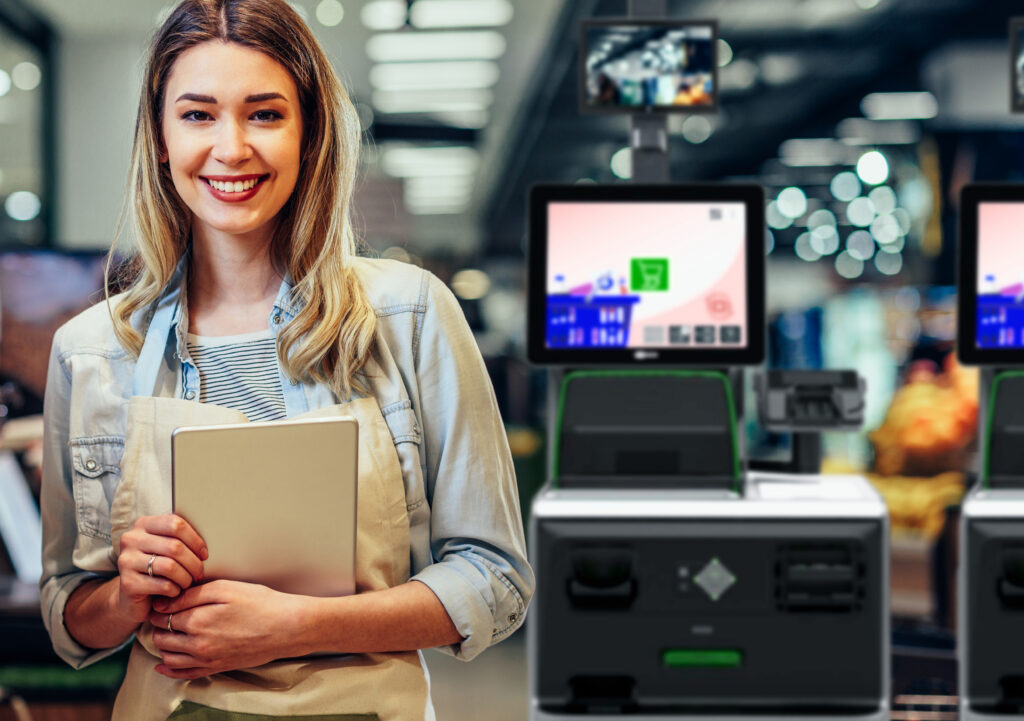
Build a Self-Checkout Experience Shoppers Can Trust
Self-checkout can make shopping faster, more flexible, and more convenient, but those benefits are not guaranteed simply because a retailer installs self-checkout units.
Shopper trust is built through the details.
It comes from:
The most effective approach brings all these pieces together.
Fujitsu Frontech North America’s retail technology portfolio supports all parts of that journey, from self-checkout hardware to AI-powered software and beyond. Our approach is to make self-checkout easy when it should be easy, introduce safeguards when they serve a purpose, and bring human assistance into the picture when it is needed.
Because the goal of self-checkout is not simply to move more customers through a transaction or introduce more automation, it’s to make the entire experience work better for everyone.
Ready to Build a Self-Checkout Experience Shoppers Can Trust?
Building shopper trust takes more than fast transactions. It means making self-checkout easy to use, keeping assistance within reach, and balancing loss prevention with a positive customer experience.
Fujitsu’s retail technology solutions help retailers bring these priorities together, from smarter item recognition to responsive associate support.
Contact us today to discuss your self-checkout challenges and discover how Fujitsu can help you create a smoother, more reliable experience for shoppers and associates.
Unlock the Future of Retail with Fujitsu

Bob Brower
Bob Brower has developed a reputation of diversified technology sales leadership success in software, hardware and services.